The Sad Fall of Dar Maghreb

Once upon a time in West Hollywood, long before Lucques and Mozza, there was the most exotic, exciting dining experience in Los Angeles — at least for a kid with wanderlust and an adventurous palate. The Moroccan palace of Dar Maghreb.
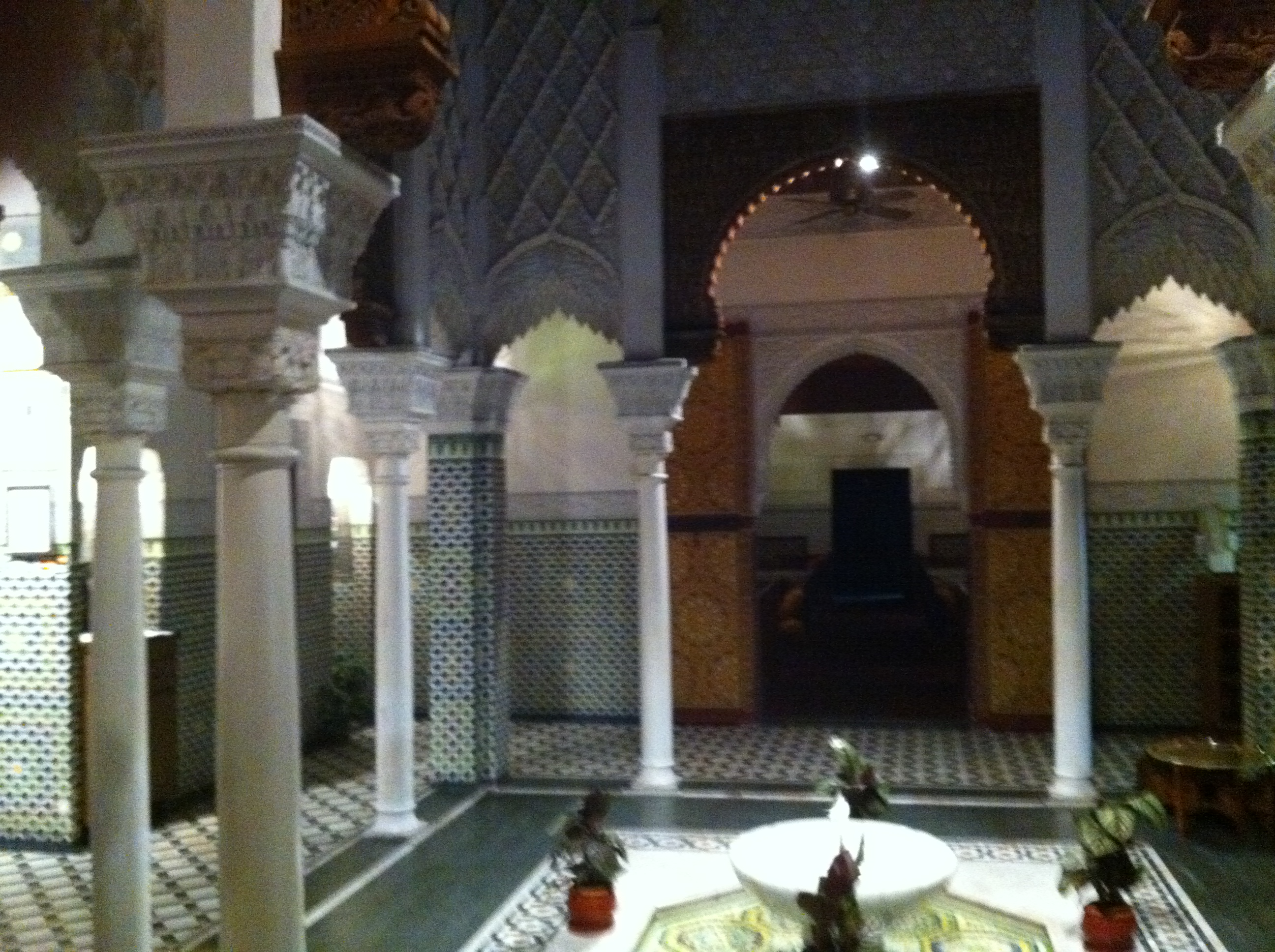
The courtyard at Dar Maghreb

I had the good fortune, growing up, that my father was best pals with the owner and driving creative force behind Dar Maghreb. Pierre Dupar was a corpulent caricature of a French chef in the best and worst ways. When it came to food and wine, he could be generous, funny and full of heart, sharing a vintage year Mouton Rothschild with a 20-something kid with an interest in wine like me, or inviting my father on tours of the Michelin 3-star restaurants of France — and printing up business cards for him that said he was a food critic with a non-existent Los Angeles food publication. And he could be heartless, ordering his workers about like they were pack animals, making unreasonable demands of his young hispanic wife like she was his maid (which she was before he married her), belittling his children in front of others. The restaurant was his great love — he even designed the architecture himself, and welcomed guests in his flowing robe like a proud papa.

And Dar Maghreb was among the proudest buildings in the city. From the outside, a gorgeous stucco square with desert palms and nothing to let you know what it was but a bold swatch of silver Arabic on the wall. Pass through the gilded silver doors, and you were a world away from the seedy buzz of Sunset Boulevard just outside. A fountain bubbled peacefully in the middle of an interior courtyard. In high-ceilinged rooms to the right and left came jovial conversation, the scent of roasted meats and cinnamon, and the sound of finger cymbals being clanged by busty belly dancers. And Monsieur Dupar, always Monsieur Dupar, with a hearty welcome and shake of his fat hand.

Fast forward a couple decades, and we decide to take my son, Flynn, to Dar Maghreb for his 7th birthday. We invited my father. Monsieur Dupar is now at the Great Table in the Sky, ordering celestial servants around. He had a massive coronary on an airplane between Bordeaux and Amsterdam. Minus his robed presence inside those sparkling silver doors, Dar Maghreb feels sad and forlorn. The seven-course meal and belly dancing has become a cliché, the Arabic writing on the building now sits astride the English translation, “Dar Maghreb,” as if the restaurant either felt neglected and needed to remind people it was here, or maybe they wanted to prevent vandalism from people who mistook the building for a mosque. How the times have changed. The waiters are now Chinese. And what used to be a bustling, thrilling restaurant was now almost empty on a Thursday night even as Hollywood pulsed frenetically outside. I almost expected to hear the requisite crickets on cue.
The sugary savory bastilla, the fragrant carrot and eggplant salad scooped up with sesame bread, the roast chicken with lemon and olive to the final sip of mint tea all still taste just as good, if tinged with a melancholy aftertaste at the gaping absence of Pierre Dupar. And the kids loved the entire experience. But my dad looked a little sad, and I couldn’t help but have the feeling you get when you see a performer 30 years beyond their prime, still belting out their one hit song to no one in particular in a lounge at an airport Holiday Inn.
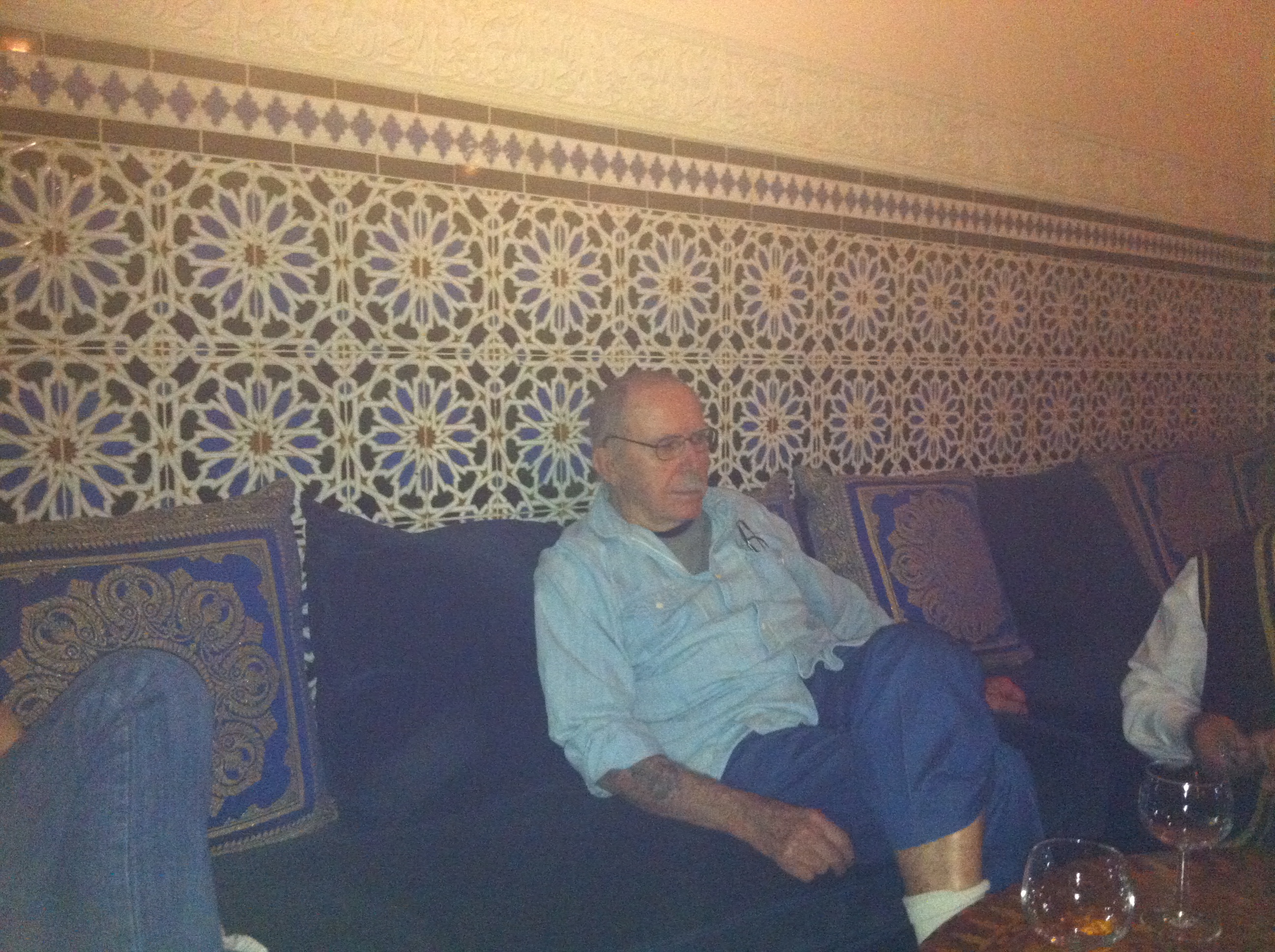
Dr. Colgin at Dar Maghreb

The last time I was at Dar Maghreb was five or six years before, for Pierre Dupar’s memorial. It was sad to say goodbye to Pierre and to know we would never again see him welcoming us into that courtyard. Maybe we’ll go back to Dar Maghreb again, or maybe we won’t. This felt a bit like a goodbye, too.

Imagawayaki

Little Tokyo is one of my favorite neighborhoods in Los Angeles. Amidst the grunge and concrete rivers and cardboard box cities, it’s like an island of calm, where you can sit in the shade of a Noguchi monolith eating mochi ice cream, or stroll the contemplative gardens at the Cultural Center.

The heartbeat of the neighborhood is Japanese Village Plaza, a narrow winding alley between 1st and 2nd sts. and San Pedro and Central of shops and eateries that, for my one visit to Tokyo, seems to capture something of the spirit of that  city. I’ll often see lines waiting for the shabu shabu joint to open. But I like to pass by and sit outside Sushi & Teri and get a tall Sapporo and some reasonably decent sushi. But the real attraction is directly across, when my kids finish their miso soup. At the Mitsuru Café, you can buy fresh, warm imagawayaki for a buck a piece.

Batter is poured into a special pan, sorta like Japanese abelskivers, and then filled with sweet azuki bean paste. More batter on top, they are flipped, and then removed and stacked. Kids love ’em as much as we do. A great way to introduce your kids to Japanese culture — they have fun learning the name, too. Which name, apparently, refers a spot near the Kanda Imagawabashi bridge in Japan where they were sold during the Edo period in the 18th century. It’s fun to stand outside the window and watch them make the imagawayaki in their big traditional cast-iron imagawayaki maker.

While you’re there, pop into the Yamazaki bakery on your way out and grab a few curry doughnuts for home.

The Torta

Do you live near a Vallarta Market? If you are in Southern California, you may be fortunate enough to have a Vallarta Market near you. It’s the Whole Foods of the Mexican community, minus the organic and the quinoa and the whole-paycheck part. The Vallarta Market is REALLY inexpensive, and has really great Mexican stuff. The prepared foods are fabulous (pick up the “Pork al Pastor” pre-marinated in the meat section, take it home and grill it up with some tortillas and their homemade salsa roja.)

Anyway, the best part of the Vallarta Market, in my humble opinion, is the Torta Cubana. You can only eat this sandwich once a year, or it will kill you. It takes two days to eat, and each time you eat it, it takes half a day to digest. But it is worth it — a bun piled with beans, fried egg, grilled ham, bacon and cheese. (And still, it’s better for you than one of those Carl’s Jr. things you see on TV.) Add some salsa and pickled jalapeños from the salsa bar in the area you go to sit and eat. And remember, eat half and take the rest home. For y’all unfortunate folks with no Vallarta Market nearby, here’s a recipe so you can make it at home:

Serves two for two days (or four):

Two kaiser rolls or other roundish, flattish bread (you could even get away with ciabatta)
two slices ham, grilled quickly in a hot pan
four pieces of cooked bacon
two eggs, fried
grated colby or cheddar
1/2 cup refried beans
1/2 small onion, chopped
1/4 cup chopped cilantro
mayonnaise
red salsa
pickled jalapeños

Slice the buns open, brush with mayonnaise, and grill in a hot pan until toasted. Add a little more mayo. Then build your torta — refried beans, topped with a fried egg, topped with a slice of ham and the bacon, topped with grated cheese and then chopped onion and cilantro. Put the top bun on. Now put a little vegetable oil (canola, sunflower, whatever) in a pan — just a little bit to create a light barrier. (This could be a good instance for one of those oil sprays I’ve seen.) Heat the pan and place the tortas in the pan to toast. Cover with a lid that is slightly smaller than the pan, so you can press the sandwiches down some. (You could use a panini grill instead if you’ve got one.) When the bottom seems lightly toasted, flip the sandwiches and grill the top. You want them a little toasty on top and bottom, and you want the cheese to begin to melt a little. Take the sandwiches off, remove the top and drizzle with some salsa and add some jalapeños, and put the top back on. Serve.

If you like to experiment, you can mix it up by trying different cheese, different meat (leftover cochinita pibil makes a great torta, as does shredded chicken).

Beverage suggestions: Cold Mexican beer, cold Mexican soda

Next Newer Entries