It’s always sad for me to write about the ghosts of places I loved, in decline or disappearing. (Favorite restaurants of the past, Dar Maghreb and Anisette, for example.) Such is today’s ghost story, my fingers tapping glumly at the keyboard…
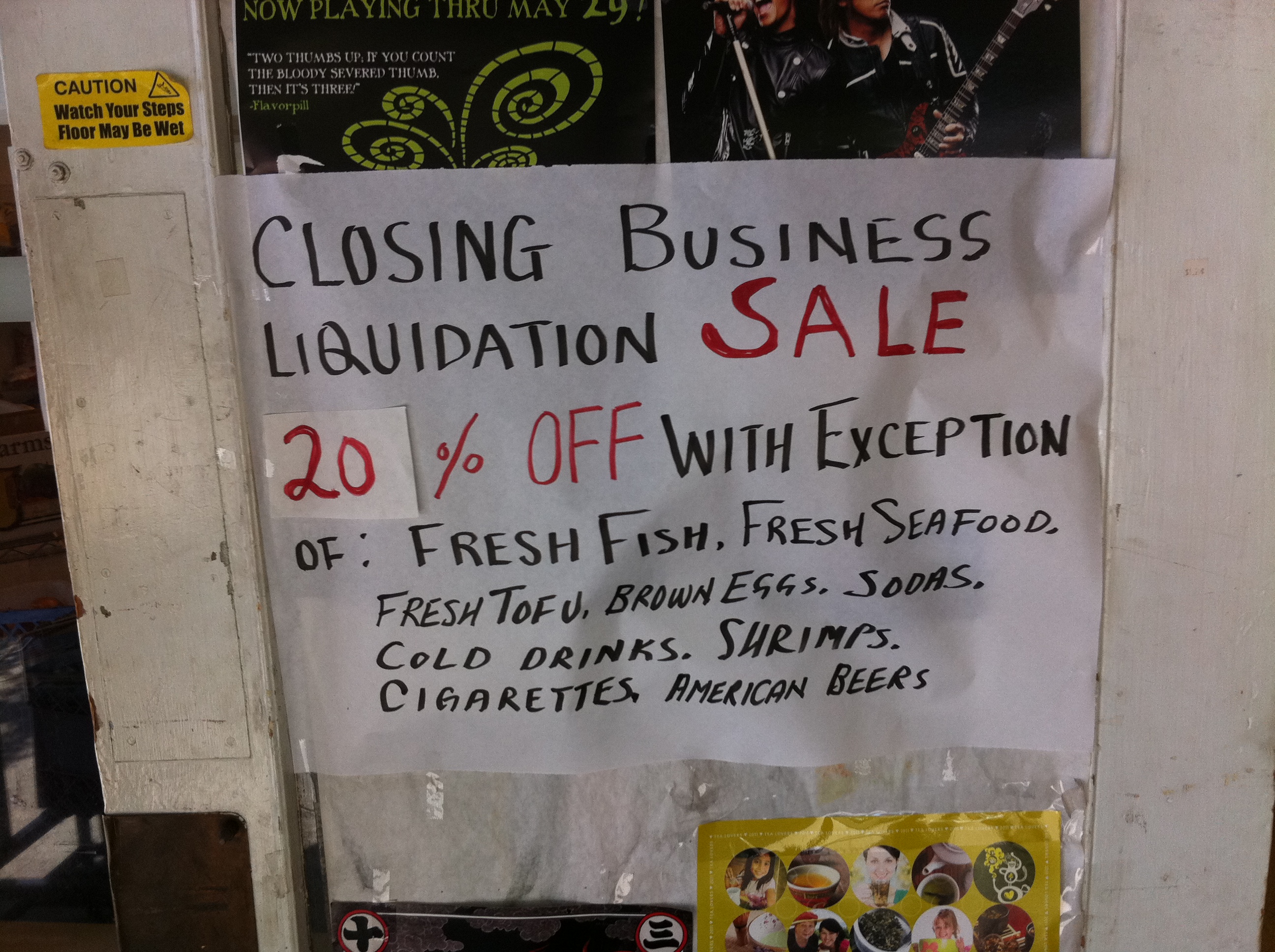
Last days at the Safe & Save
I stopped awhile back by one of my favorite markets, the Safe & Save on Sawtelle. On a stretch of “Little Osaka” that’s becoming somewhat trendy with izakayas and Giant Robots, it was — along with Satsuma Imports and Hashimoto bonsai nursery — one of the last vestiges of the Old Sawtelle. More
One of the greatest things about living in (near) Los Angeles is the number of great markets we have. (Do YOU have an Indonesian market near you!?) I once told a non-food-obsessed friend about all the markets I go to. He said, “You have a problem.” My biggest problem is that they’re not all lined up next to one another in a strip mall. So like I said, I drive.
I have been accused of being bourgeoise for my relentless proselytizing about eating fresh and shopping often. And I do realize that I am fortunate to work for myself and actually have the time to drive around to markets. More
Is it possible for four people to eat six pounds of porterhouse steak? When my friend, Greg, brought over said meat (handsomely profiled in a previous post, “The Emperor of Steaks”), we figured there was going to be a LOT of leftovers. There was not. Usually my wife and I eat half a pound between us. But this was some seriously good dry-aged meat. We had a first serving. Then a second… None of us could stop. This was dry-aged nirvana from the hallowed coolers of Harvey’s Guss Meat Co. in Mid City L.A.
Meat mural
Our bookkeeper, Joe Gussman, had been telling us for years to come visit his dad’s butcher shop sometime when he was working. I made a mental note but never got around to following up. But one day friend Greg asked me whether I knew of Harvey’s Guss, the fabled L.A. butcher. I connected the dots but had my wife give Joe a ring just to confirm.
Fast forward a couple months after the porterhouse, and I decided to visit Harvey’s Guss myself. I ordered two 2-inch thick rib steaks on the bone — my favorite cut. Just by chance, Harvey was out of town so Joe was in charge when I went to pick up my steaks. The place is located in a strange confluence of streets and cultures — where the Fairfax Ethiopian neighborhood abuts the old Jewish Mid City abuts mini-Tijuanas all around. If you were driving along looking for it you’d probably miss it. Was it in that apartment building I just passed, or was that a warehouse? And you can’t turn on the street where it sits, like water for thirsty Tantalus, just out of reach. So you must drive around and around until you figure your way through the labyrinth. There’s no open sign, no helpful customer service associate to assist you, you enter through a metal security door into a space where white-frocked workers are busy. They wave you in, point you to the office. That’s where Joe (or probably Harvey when he’s around) sits, sorting orders, answering the phone. This is meat at its most glorious, and meat sales at its most elementary. If you want a nice gift box, go to an Omaha Steaks boutique. If you want a bag to put your meat in, bring one.
I got a tour of the dry aging cooler, which maybe all customers get if they ask. I prefer to think it was a privilege of knowing Harvey’s son. Joe graciously consented to my filming his explanation of what I was seeing to share with you. Here it is:
Funny to think when I was younger I didn’t like steak.
In case you don’t feel like clicking over to the links page to find your own way to Harvey’s Guss, here’s the info you need: (And don’t forget, call a day ahead. The Gussmen are busy and have meat to sell…)
Harvey’s Guss Meat Co.
949 S. Ogden Drive
Los Angeles, CA 90036
(323) 937- 4622
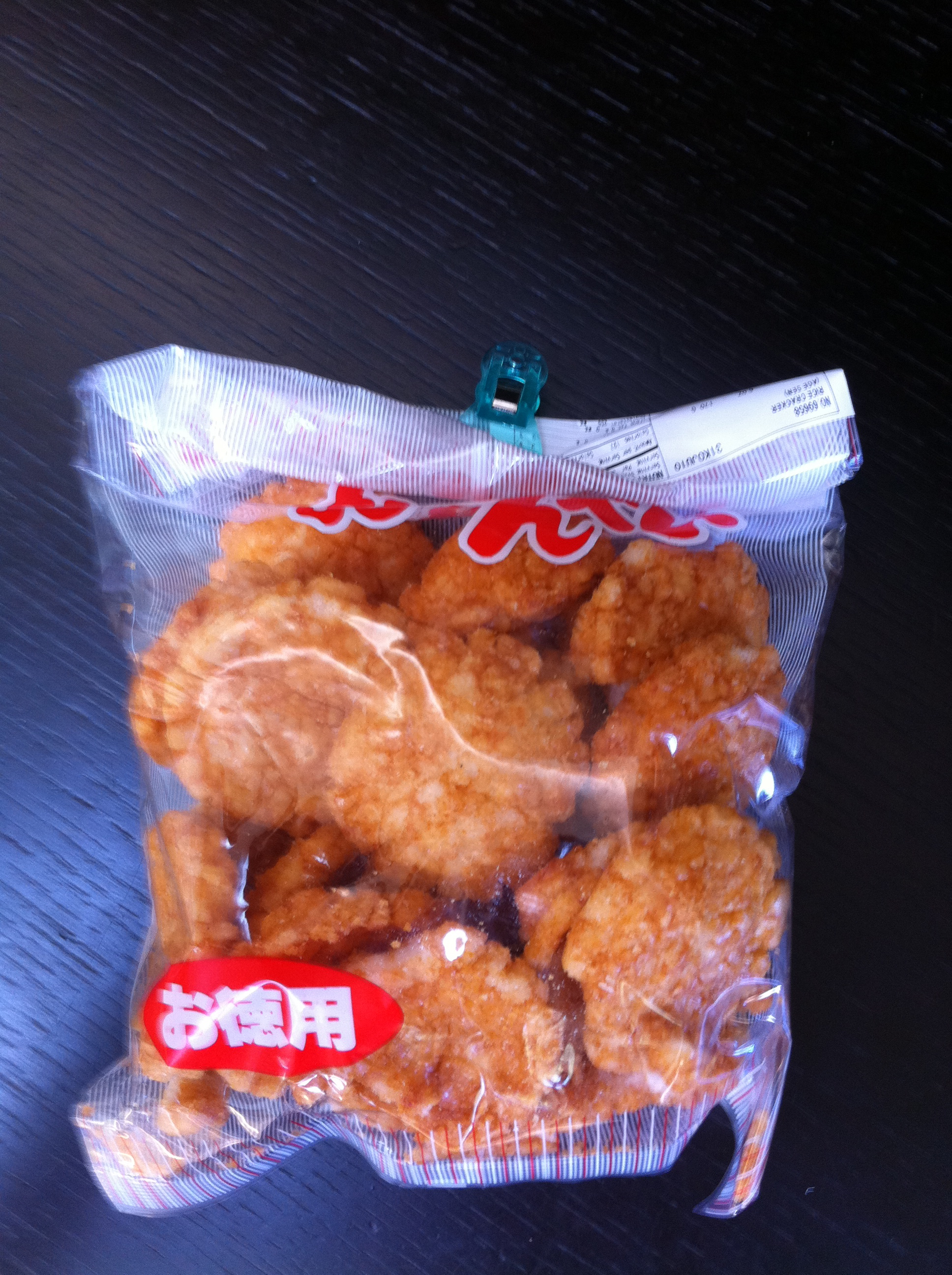
We call them “crack” snacks, because they’re so good that they’re addictive. And you’ll find yourself plotting ways of hiding the half a bag that’s left from your spouse and kids because you want them all for yourself.
In short, they bring out the worst in you. But man, are they tasty.
Some crack snacks I bought yesterday that my wife has already gotten into
Why is it that the Japanese make snacks that are so much better than our snacks? I don’t know. They’re sometimes salty and sometimes kinda sweet and sometimes both at once. Sometimes they have a little MSG in them, which unless you’re allergic to you can live with.
I first encountered these rice cracker snacks when I was in Tokyo. I went into a convenience store and bought a whole bunch of bags of them to bring home. I didn’t know what any were, since I can’t read Japanese. Some had strange things in them like busted up little crabs or powdered squid. (You can usually avoid those kinds if you want to because they’ll have little pictures of crabs or squids on them … I realized later). Some are spicy with chili, others made with sweet nori seaweed.
How do you know which ones to get? You don’t. Just get the ones that look best to you. And where do you get them? I get mine at the Japanese markets here in Los Angeles — the Nijiya Market on Sawtelle or in Little Tokyo, and the Mitsuwa Market on Venice and Centinela. If you’re in a city you can find them in your own Japanese market. Otherwise, have fun online at asianfoodgrocer.com (look under “Pocky, Snacks & Candy” and click “Rice Crackers”).
In the meantime, come Japanese snack shopping with me:
I’d been reading about the stuff for years. A mythical ham cured for years from the meat of the black-hooved Iberian pig, left alone to wander among the oak woods of Salamanca foraging for acorns — “bellotas” in Spanish.
If you’ve ever been to Spain, you know they’re serious about their ham. One of the most popular restaurants in Madrid is the Museo de Jamón — the “Ham Museum”. And in a country that takes its ham this seriously, iberico bellota is king. For years if you wanted some, you would have to travel to Spain. Only recently was it cleared for export to the United States, with our stringent regulations against the importing of long-fermented, unpasteurized things.
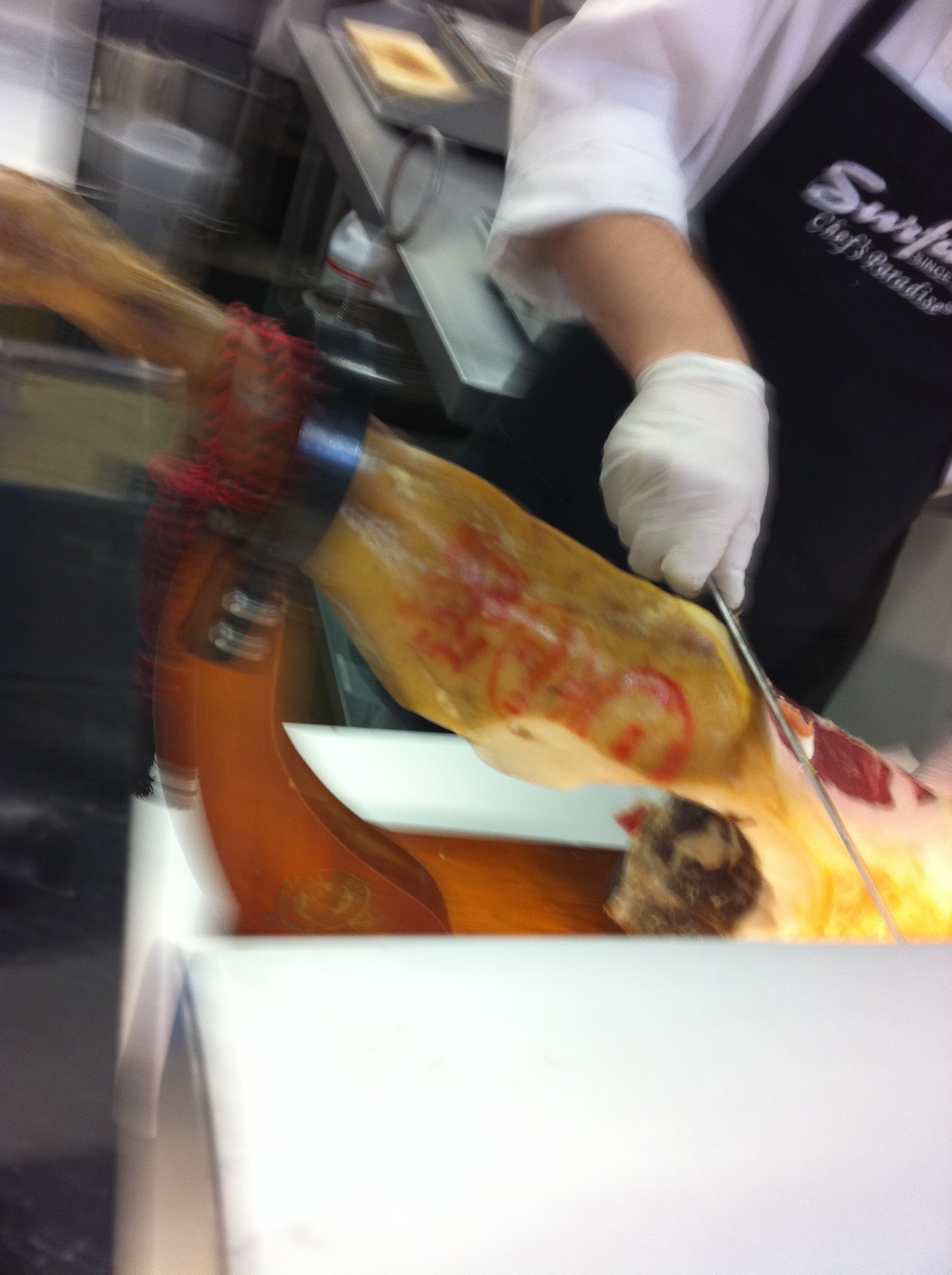
Guy carving iberico bellota
Iberico bellota is one of the best things I’ve ever put in my mouth. It will make you forget that proscuitto de Parma you used to think was so good. I love to watch the guy carving slices from the whole ham in the traditional manner (it is never sliced on a machine like proscuitto, so it always has a rustic, thicker quality). The meat explodes on your tongue in layers of flavor — nutty and dense, elegant and briny — and the fat is unctuous and silky. I must stop talking about it now or I’m going to have to excuse myself…
It is, indeed, the most expensive ham in the world — I pay $135 a pound for it, and am grateful for the privilege. I don’t buy it often, and usually get a quarter pound for $35. It’s plenty. You might have trouble finding this stuff. If I were you, I would make like a detective and do whatever you had to do to pick up its trail. If you live in L.A., I get mine at Surfa’s in Culver City. You could likely get it at the Spanish Table in Seattle (I know there’s a few of you out there). Probably Dean & DeLuca’s or someplace like that in NYC. You could buy a whole one online from tienda.com for $1,400. (Let me know… I might go in on it with you.)
A recipe?
Buy some iberico bellota. And eat it. Serves 1. (You won’t want to share.)
If you have to do something to it, get the best crusty loaf of bread you can buy, get the best butter you can buy… tear off a piece, spread a little butter, top with iberico bellota, and sprinkle with a little Maldon salt.
In heaven, iberico bellota will grow on trees like figs.




 skinny girls & mayonnaise