Sonoma Market Breakfast

One sparkling winter Sunday morning in Sonoma County, as mist rose from frozen fields through the bare leaves of apple trees, with my wife and kids, my mom and the Wine Guerrilla and miscellaneous sisters, we went to a favorite spot for breakfast. Willow Wood Market Café in the tiny one-horse town of Graton. If you’re ever hungry and meandering along the Gravenstein Highway north of Sebastopol some morning, I suggest you hang a left on Graton Road and do the same.

Unraveling scarves and jackets as we settled around a large table, the comforting scent of sausage and coffee filled the sunlit room. Browsing the menu, my eyes gravitated toward the usual suspects: steak and eggs, smoked salmon, french toast and sausage. And then I spotted an interesting choice: the “market plate breakfast”. Warm polenta, a farm fresh egg, spinach cooked with coppa, roasted tomatoes and camboloza toast. It was a surprisingly harmonious symphony of morning flavors — even the things you wouldn’t expect on a breakfast menu like spinach and blue cheese.

Your kids might screw their noses up at this breakfast, as mine did. That’s just fine… give them Eggos, and save this gem for the grown ups. Did I mention it’s the perfect brunch, particularly when served to friends with a good, spicy Bloody Mary? Cheers.

*   *   *

Sonoma Market Breakfast
Note: for my version, I like two eggs per and use pancetta instead of coppa

for each breakfast:

2 eggs
1/4 cup dried fine polenta
1/2 cup spinach
1 slice pancetta
5 or 6 heirloom cherry tomatoes
1 slice crusty bread
1 slice (or 1 tbsp crumbled) blue cheese such as cambozola or gorgonzola
extra virgin olive oil
salt & pepper

Cook the polenta first: use 2x the water of the dried polenta you are cooking. Heat the water to a boil and add polenta, lowering heat to medium-low. Cook polenta, stirring every few minutes and adding water as it cooks away, for 20 minutes until thick. Cover and set aside.

While the polenta is cooking, roast the tomatoes. Make a little pan out of foil, add the tomatoes and drizzle with olive oil and sprinkle with salt. Cook about 20 minutes at 350 degrees.

For the spinach, cut each slice of pancetta into a few pieces, and saute until rendered and crisp in a tbsp or so of olive oil. Add spinach and cook briefly until wilted. Toast your bread slices and top with a little blue cheese while still hot.

Lastly, cook your eggs. They served poached eggs at Willow Wood, I like to fry them in a pan with a single flip. To compose your Market Breakfast, place some polenta on a plate with the tomatoes and cooking oil drizzled over the polenta. Put the spinach and pancetta next to the polenta, and the eggs next to that. Put a slice of toast on each plate, sprinkle some good sea salt and pepper over the top, and serve.

The Emperor of Steaks

This blog spends a lot of time in Italy, particularly the north. (In our mind, at least, if not in reality…) And now, I humbly present the king of all carnivorous northern Italian preparations — Bistecca alla Fiorentino.

6 lbs. of dry aged porterhouse, courtesy Harvey's Guss Meat Co.

If you have a crappy steak you bought from Costco, by all means — smother it in A-1, teriyaki sauce or sauteed mushrooms. If you have a good steak or a great steak, there is no option but Fiorentino. This will be the simplest recipe I have given you yet. And perhaps the most important. Unless you are a vegetarian. This will not work with a tofu cutlet.

Bistecca alla Fiorentino

rib-eye or porterhouse steak on the bone (about 1/2 lb or more per person), cut at least 1 inch thick
extra virgin olive oil
1/2 cup arugula per person
lemons
sea salt & pepper

Take the steaks out of the fridge an hour before you will cook them. Season with salt and pepper, and drizzle with olive oil.

Get the grill as hot as it will get. 600 degrees or above is good. Sear the steaks on each side, about 3 minutes per inch for medium rare. (Use a sharp steak knife to poke into the steak and make sure it is cooked to your liking.)

Here’s a neat trick my friend, Greg, taught me: On a cutting board, drizzle a little more olive oil, squeeze some lemon juice and sprinkle some salt and pepper. Remove the steaks from the grill and place on the cutting board to rest for 5 minutes. (The olive oil and lemon juice you put on the cutting board will soak into the meat when you cut it, and will bind to the meat juices so the steak will remain juicy.)

When they are done resting, slice the meat first off the bone, and then cut across the grain into 1/3 inch thick slices. Spread half a cup of arugula on each plate, arrange 4 or 5 slices of steak on top of the arugula. Squeeze lemon juice over the meat and arugula, drizzle some olive oil over the top as well. Then sprinkle with salt and pepper.

Harry’s Bar & the Gondolier’s Song

Sometimes I get a bug for the cuisine of a particular region or city. It’ll happen suddenly, triggered by a conversation or a song or a bit of news I read in the paper.

So it was a few days ago when I saw a picture of Venice, one of my favorite cities, in a magazine. With the exception of a one night break for chicken with the in-laws, this evening marks the third straight night of Venetian food at our house. My wife doesn’t care where its from, so long as it tastes good, and my kids get annoying little geography and cultural lessons in the process. And I’m transported to the winding alleys, surprise bridges and ambient gondolier songs of Italy’s sinking treasure.

What is the food of Venice like? As, compared for example, with the rest of Italy? Being in a lagoon, there’s a lot of seafood. One of the best seafood markets I ever browsed — aside from the fabled Tsukuji in Tokyo — was one I stumbled onto wandering around Venice. I wished I had a kitchen so I could purchase the strange shellfish and mollusk I saw there… In the bars you can snack on cichetti, the Venetian version of tapas, while you sip one of the regions lovely white Friuli. Risotto is ubiquitous, and the Venetians lay claim to the origins of polenta. Like everywhere else in Italy, they’ve got a famous bean soup.

Two of the most fabled dishes associated with Venice are carpaccio and scampi. Indeed, carpaccio was invented here at Harry’s Bar — the beef carpaccio, not the seared ahi tuna kind. Scampi is a particular kind of shellfish related to lobster and also a preparation that in Italy bears little resemblance to the dish that left you reeling with indigestion after that meal at Red Lobster. I’m sharing with you easy and impressive preparations for both. Real scampi is difficult to obtain in the states, so I’ve used large red shrimp. For the carpaccio, you’ll want very high-quality lean beef. Or, if you must, seared ahi.

*   *   *

Carpaccio

1/2 lb lean steak (hanger steak, filet), half-frozen
capers
1 egg yolk
1 tsp rice wine vinegar
1/2 cup olive oil
juice 1/2 lemon
1/2 tsp dijon mustard
dash of Worcestershire sauce
1 tbsp cream
salt & pepper

Make the sauce: Put the yolk, vinegar, mustard and a bit of salt and pepper in a bowl and whisk vigorously for a couple minutes, until it becomes foamy with air. Create a mayonnaise emulsion by gradually dripping in half the oil, stirring constantly. Then add the rest in a stream, continuing to stir until it thickens. Then whisk in the lemon juice and Worcestershire, followed by the cream. Sauce should be thick but liquidy. If it is too thick, add a tbsp of milk. If you have a small plastic squirt bottle, put the sauce in there until ready to serve.

With your sharpest knife, slice the steak as thinly as you can, and quickly lay the thin slices out on two large plates, as artfully as you can. (You could stretch this to four people, serving as an appetizer on four smaller plates). Once all the steak has been laid out, drizzle with your mayonnaise sauce, creating a pattern on top. Then sprinkle with capers, squeeze a little more lemon over the top, drizzle with a touch more olive oil, sprinkle with flaky salt and pepper and serve.

*   *   *

Scampi Venezia

12 large shrimp, still in shells but split down back and cleaned
1/2 cup panko bread crumbs
1 clove garlic, minced
1 tbsp grated parmesan
2 tbsp extra virgin olive oil
1 tbsp minced Italian parsley
2 large basil leaves, minced
salt & pepper

Toast panko in a pan until browned. Transfer to a bowl. Add garlic, parmesan, parsley and basil and toss. Then toss in olive oil.

Flatten out the shrimp as demonstrated in the video, with the back of a large knife. Lay down on a baking sheet, split side up (shell down), and place a small mound of panko mixture on top of each shrimp. When finished, bake in a 350 degree oven for about 12 minutes, until panko mixture is turning golden. Remove and serve. (Note: these scampi would also be nice served on top of cappellini tossed with olive oil, lemon juice, freshly minced garlic and grated parmesan, salt and pepper).

Wine suggestion: a light red or crisp white such as pinot grigio or sauvignon blanc would work well with both dishes.

Drago’s Crabs

I was in Alaska once on a luxury cruise ship with some clients of mine and some friends. We went hiking up a mountain from the Disney-esque town of Skagway, and discovered wild porcini mushrooms growing along the path. I picked as many as I could and made a bag out of my shirt, unsure what I was going to do with them all as I was staying in a cruise stateroom with no kitchen.

When we got back into town, we went to the local brewpub for a beer and some crab legs. Sitting at the bar was Celestino Drago, a famous Genovese chef and restaurateur here in Los Angeles, who was the guest chef on our cruise. I approached him looking like an expectant mother, introduced myself, and revealed the contents of my shirt. “Porcini!!” he gaped. “Where did you find them!??” He then presented the answer to my dilemma, inviting me to cook with him one afternoon in the galley of one of the ship’s restaurants.


He trimmed up the porcini and asked me to make a risotto with them. For his part, he found a couple fresh Dungeness crabs from nearby waters, broke them into pieces, and together with tomato and saffron and olive oil, produced one of the best pastas I’ve ever eaten.

I have made it here for you. And included the recipe for Drago’s linguini with crab, as I remember it. Drago might differ. I hope it will be one of the best pastas YOU’VE ever eaten, regardless of whether you are able to pull crabs from your own nearby waters. (I recommend Dungeness crab cracked in the shell for this pasta. There’s a lovely ritualistic quality to breaking the shells and sucking the meat from within while you eat the pasta. In the video, I’ve made it with Alaskan kind crab removed from the shell, which is good too and easier to eat.)

*   *   *

Linguini with Crab
serves 4

1 lb linguini
1 large Dungeness crab, cleaned
4 large tomatoes
1/2 tsp saffron threads
1/2 cup extra virgin olive oil, plus extra for drizzling
5 cloves garlic, crushed
salt & pepper

Heat olive oil in a large saucepan over medium heat. Cook garlic until golden. Puree tomatoes in a blender, and add to olive oil and cook, stirring frequently.Meanwhile, break up crab into many small pieces, cracking legs and claws.

Heat water in a large pot for linguini. Add 2 tbsp salt and, when the water boils, add linguini, stirring frequently to prevent sticking. While pasta is cooking, add crab chunks to tomato sauce and toss. Add saffron and stir. When linguini is cooked to al dente, scoop from pot into sauce pan and turn heat on to high. Cook, tossing and stirring, for a couple minutes until linguini is well coated with sauce. Season to taste with salt and pepper. Using tongs, scoop onto four plates, making sure to distribute crab chunks evenly. Drizzle with a little additional olive oil and serve.

Wine recommendation: a California pinot noir or Italian sangiovese

Japan’s Crack Snacks

We call them “crack” snacks, because they’re so good that they’re addictive. And you’ll find yourself plotting ways of hiding the half a bag that’s left from your spouse and kids because you want them all for yourself.

In short, they bring out the worst in you. But man, are they tasty.


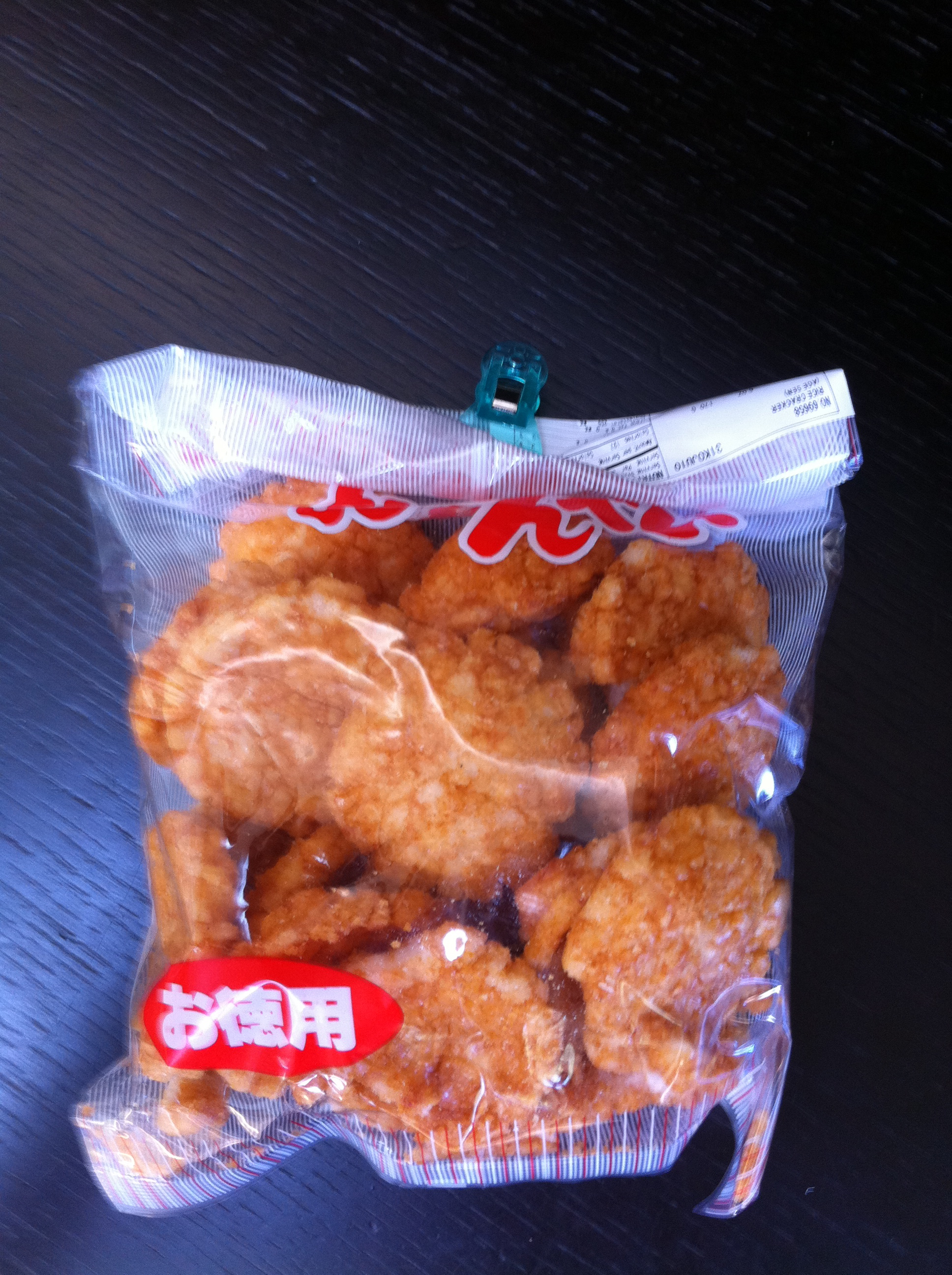
Some crack snacks I bought yesterday that my wife has already gotten into


Why is it that the Japanese make snacks that are so much better than our snacks? I don’t know. They’re sometimes salty and sometimes kinda sweet and sometimes both at once. Sometimes they have a little MSG in them, which unless you’re allergic to you can live with.

I first encountered these rice cracker snacks when I was in Tokyo. I went into a convenience store and bought a whole bunch of bags of them to bring home. I didn’t know what any were, since I can’t read Japanese. Some had strange things in them like busted up little crabs or powdered squid. (You can usually avoid those kinds if you want to because they’ll have little pictures of crabs or squids on them … I realized later). Some are spicy with chili, others made with sweet nori seaweed.

How do you know which ones to get? You don’t. Just get the ones that look best to you. And where do you get them? I get mine at the Japanese markets here in Los Angeles — the Nijiya Market on Sawtelle or in Little Tokyo, and the Mitsuwa Market on Venice and Centinela. If you’re in a city you can find them in your own Japanese market. Otherwise, have fun online at asianfoodgrocer.com (look under “Pocky, Snacks & Candy” and click “Rice Crackers”).

In the meantime, come Japanese snack shopping with me:

Previous Older Entries Next Newer Entries