Each year, we gather with a small group of dear friends — the same cast, year after year, with rare new invites — for an intimate New Year’s Eve dinner. It’s a great excuse to let my creativity run wild with expensive and rare ingredients my wife wouldn’t normally let me buy. Indeed, my friends have come to expect as much.
Here, without further ado, are some highlights of the 12 courses from our 2010/11 New Year’s Eve dinner. Enjoy…
Mise en place
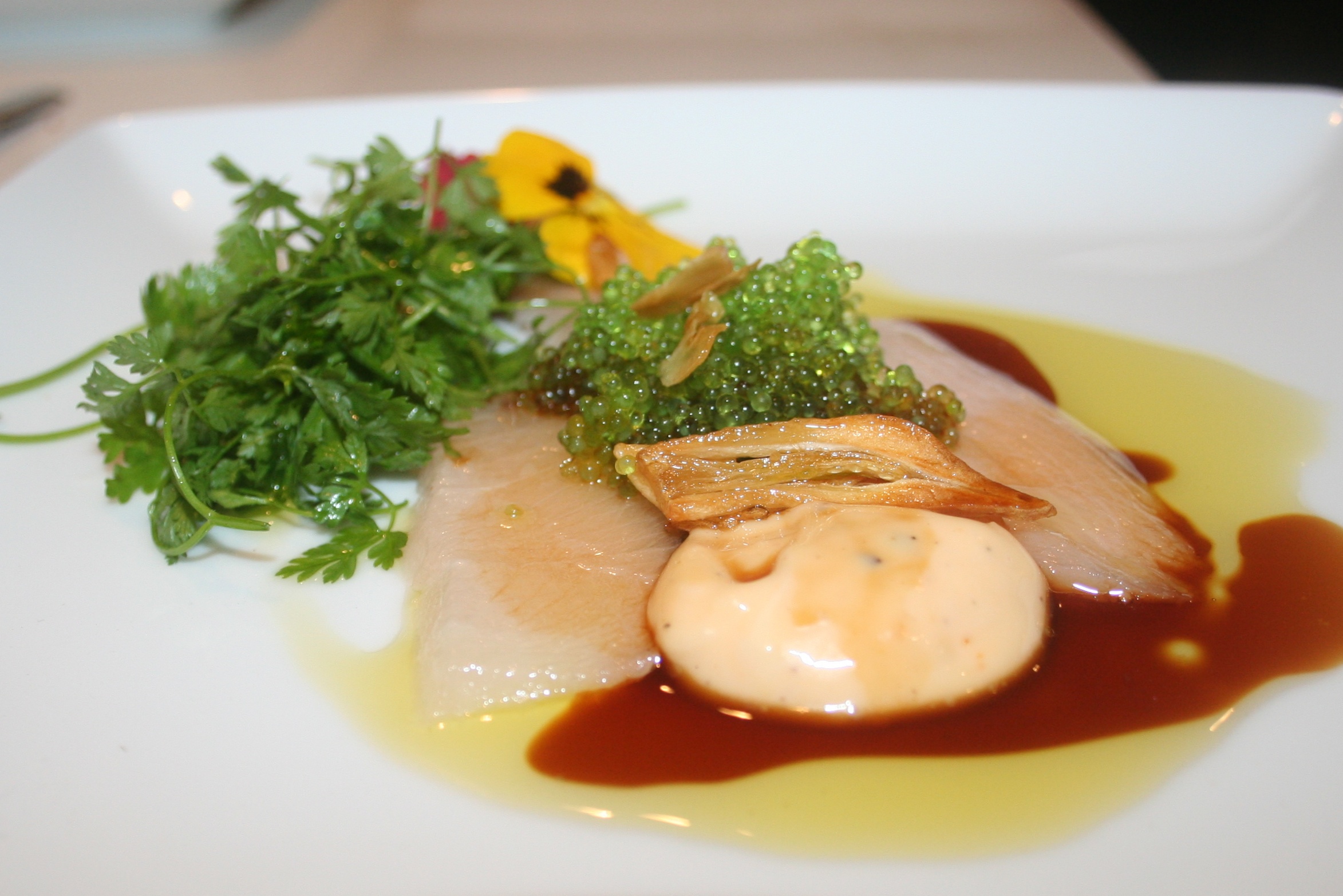
Yellowtail sashimi with spicy lemon aioli, wasabi flying fish roe, crispy garlic and chervil salad
Yellowtail sashimi with spicy lemon aioli, wasabi flying fish roe, crispy garlic and chervil salad
Garlic soft shell crab with roasted shimeji mushrooms and sakura denbu
“Duck clouds” — Rillettes with white truffles, plum sauce and truffle scallion potato mousse
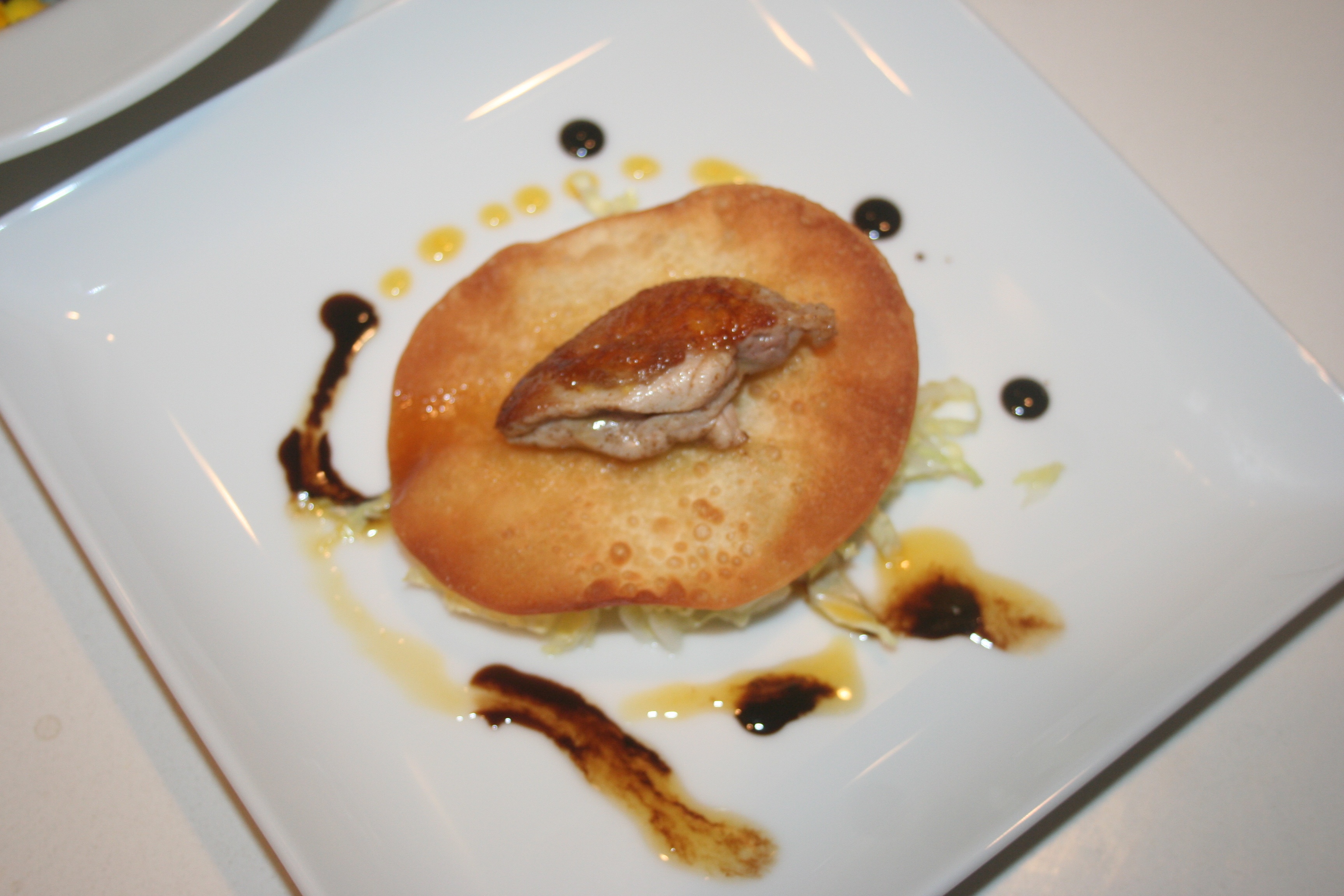
Quail breast medallions, crispy wonton, savoy cabbage and Clementine ginger reduction
Duck liver paté ravioli with mashed Kyoto sweet potato, demi glace butter and shoga ginger
Proscuitto di Parma with winter melon and Calpico gels, sugar shards and pickled garlic
Hickory-smoked five spice baby back ribs with "kim chi" red cabbage chiffonade
Dark chocolate-draped madeleines with coffee whipped cream
I don’t make New Year’s resolutions. I’m not overweight, and I like the few bad habits I have left. Instead, I prefer to look back at the past year and consider some of the things I’m thankful for:
• That meat grown in sheets in laboratories is no closer to arriving on grocery store shelves than it was last year.
• That dinner guests have mostly stopped arriving at our house with red velvet cupcakes when I ask them to bring dessert.
• The fresh eggs my chickens give me every day.
• That Slow Food is gradually replacing fast food in the vernacular.
• That people (other than me) are beginning to cook with duck fat again.
• My new Weber grill, and my “Serious Barbecue” cookbook by Adam Perry Lang.
• That the restaurant, The Hump, closed after being caught selling whale meat.
• That my third child, daughter Imogen Pearl, was born healthy.
• That the midterm elections are over and I can once again enjoy my afternoon tea without being reminded of politics.
• That I was able to enjoy several lingering meals in my favorite brasserie, Anisette, before it closed its doors. Including a number with my 85-year-old father.
And to look forward to the New Year, and some of the things I hope for:
• The discovery that bacon is good for you.
• Inexpensive farmed truffles.
• A year-round Dungeness crab season.
• More studies proving the healthful benefits of red wine, coffee and dark chocolate.
• That people would eat less meat. And more ethically raised meat.
• A wood-burning pizza oven magically appears in my back yard.
• That you would introduce a friend or two to “Skinny Girls & Mayonnaise.” Our goal is nothing short of global domination, one palate at a time.
* That the people on earth who do not have enough to eat will be fed.
From all of us at Skinny Girls & Mayonnaise, wishing you and yours a happy, healthy and delicious New Year.
Clockwise from top: Blewits, matsutakes, white chanterelles, porcini
Every year, somewhere around the holidays, we load up the car with kids and kid paraphernalia and head north. Our destination? Over the river and through the woods to grandmother’s house — my mom’s place — in the forest of western Sonoma County. We get settled, my kids go for the cookies, and then Dad disappears. Into the wet woods, eyes scanning the shadowy duff for signs of life. Fungal life.
I first got interested in foraging for mushrooms two decades ago, while up at my aunt and uncle’s place in Mendocino. It took five years of identification before I became comfortable eating a mushroom, another five before anyone in my family would trust me enough to eat one. Now, 20 years out, I’m something of an expert. In that time, I’ve only gotten sick once. And that from an edible variety. I’ve never eaten a poisonous mushroom. I find mushrooms people pay top dollar for at fancy food boutiques and farmers markets — matsutake, oyster, porcini, black trumpets… And soon, after the torrential rains we’ve been having in L.A., I’ll see chanterelles the size of baseball gloves popping up in the usually dry woods around my own house.
My kids seem to like my hobby. It combines getting dirty and exploring, two of the best kid things:
Do I advise you take up this pastime? No. And if you must, come out with me and I’ll share my knowledge. I’ve had two people send me emails in the past week with photos of the “chanterelles” they’d found, eagerly waiting confirmation to eat their bounty. My reply in both cases was the same. “Those are NOT chanterelles.”
Once initiated, you may find yourself obsessed. For some, like my wife, it is the thrill of the hunt. She compares it to going to garage sales looking for that one great find. For others, it is the awesome diversity of edible wild mushrooms — some that have the texture and taste of fried chicken, others that smell of maple syrup; some that can substitute for lobster in a bisque, and still others that resemble the mane of a lion. I like the hunt, and I like the cooking. And when it’s dry at home and I can’t get north, I suck it up and buy them from my friends at the farmers market who do the work for me. (Sources for wild mushrooms below)
If you like regular mushrooms, you’ll love wild mushrooms. Even cultivated varieties such as shitake, oyster or shimeji offer an adventure from the ordinary button. But look for some of the varieties I’ve mentioned above, as well as morels, yellow foot, blewits, cauliflower mushrooms and other varieties, at your farmers markets and fancy food boutiques. And when you find them, use them wherever you would regular mushrooms. In a pasta, on a pizza, folded into omelets… If it’s a cold night and you’re wet from the hunt, here’s a nice soup to warm your soul:
Wild Mushroom Bisque
1 lb wild mushrooms (or regular button mushrooms, if you must), sliced thin
2 quarts chicken stock (canned is fine — in fact, water a bouillon cube is fine)
1 onion, chopped
2 tbsp. butter
1/2 cup heavy whipping cream
salt & pepper
Melt the butter over medium heat in a large saucepan. Add the onions and sweat, cooking until they begin to brown slightly. Add mushrooms and turn heat to high. Cook, stirring frequently, until mushrooms release most of their moisture and begin to brown. Add chicken stock, cover and simmer for 20 minutes. Remove from heat and let cool for 30 minutes uncovered.
Transfer soup to a blender. (If there’s too much liquid for your blender, transfer all the solids and half the broth.) Puree on high for a minute, until soup is thoroughly pureed. Return to saucepan, heat over medium until soup begins to simmer. Turn off heat and stir in cream, plus salt and pepper to taste.
Serve with a loaf of crusty bread and some sweet butter, maybe a sweetish white wine like viogner, a fruity zinfandel or a bottle of hoppy beer such as Sierra Nevada or Anchor Steam.
Let’s get this out of the way right from the start — I’m not from the South. In fact, I’ve never even been to Louisiana. (The closest I ever came was briefly dating a girl from Shreveport. And I once sat next to Paul Prudhomme at Chinois on Main.) But like everyone else, I did get caught up in the Cajun craze a couple decades back, and could be caught slapping dried thyme on anything that had once moved and blackening it. What endured from that time was a love for gumbo.
While I may not be from N’awlins, I do consider myself a connoisseur of all things rich in flavor and heavy in calories and slow cooked and stirred with love. Food that requires patience. Gumbo is one of those great, simple dishes — like Italian bolognese or French cassoulet — that is so much more than the sum of its relatively mundane ingredients. Don’t cook it in that new stainless pot you got for your birthday; cook it in something old and preferably cast iron, black with use and memory. Gumbo gets better the longer it sits around, the longer the flavors have to integrate. And I got better at making it the longer I sat around, the longer my cooking and my soul had to integrate.
This recipe goes well with something — anything — fried: shrimp, crawfish, oysters, catfish, corn dough. It goes well with accordion, slow acoustic blues and a six pack of beer — that much better if you make the music yourself. I invite all y’all from the south to chime in with your own variations.
File Gumbo with Catfish Serves a whole bunch
2 quarts chicken stock
1 lb okra, cut into chunks (frozen is okay)
1 large onion, chopped
2 large carrots, cut into slices
2 stalks celery, cut into slices
1 8 oz can peeled tomatoes, smashed
canola oil
1 kielbasa sausage (or two andouille sausages), cut into slices
1 lb catfish, cut into chunks
1 tbsp dried thyme
1/4 cup chopped parsley
2 heaping tbsp flour
1 tsp filé powder (optional)
Note: if you have trouble finding catfish, you could use shrimp or even chicken thighs instead.
Put a couple tablespoons of oil into a large pot, and fry the okra over medium high heat, stirring often, for about 10 minutes. Add the sausage slices and onion and continue cooking for 10 minutes more, until onion is wilted and beginning to turn golden. Add carrots and celery and cook for 5 minutes more. Add the tomatoes (To smash, I like to squeeze them in my hands right into the soup — it works well and it’s kind of exciting. But you could put them in a large bowl and smash them up with fork instead.) Add the chicken stock, turn heat to medium low, cover and cook for 30 minutes.
Add catfish chunks and thyme and continue simmering. In the meantime, put a quarter cup of canola oil in a frying pan. Heat over medium high. Add 2 tbsp. flour and cook, stirring frequently, to make a roux. If it’s too soupy, add another tbsp. flour. The roux will begin to darken after about five minutes. You want to keep cooking, stirring frequently, until it reaches the color of milk chocolate. Turn off the stove. Add the roux to the gumbo, stirring in. Then add the chopped parsley and the filé. Cook for another 10 minutes and serve, over white rice with a dash of Tabasco, if you’d like. Or leave in the fridge for a day or two and then it’ll really taste good.
Sometimes I’ll be cooking at someone’s home, and will ask them for vinegar. And inevitably, they’ll hand me a bottle of balsamic.
Don’t get me wrong, balsamic is a wonderful member of the vinegar family. But it is not the ONLY member of the vinegar family. And it is also not the most adaptable vinegar. It’s really good for when you need balsamic, but not very useful otherwise. At any given time, I have eight to 10 different vinegars in my cupboard. I’m not suggesting you need this many. But having at least a handful will improve not only salads but your cooking, too.
Here is a primer on various vinegars I have in my pantry, what they can be used for, and where to find them. (Including, yes, balsamic…)
The Most Useful Vinegar
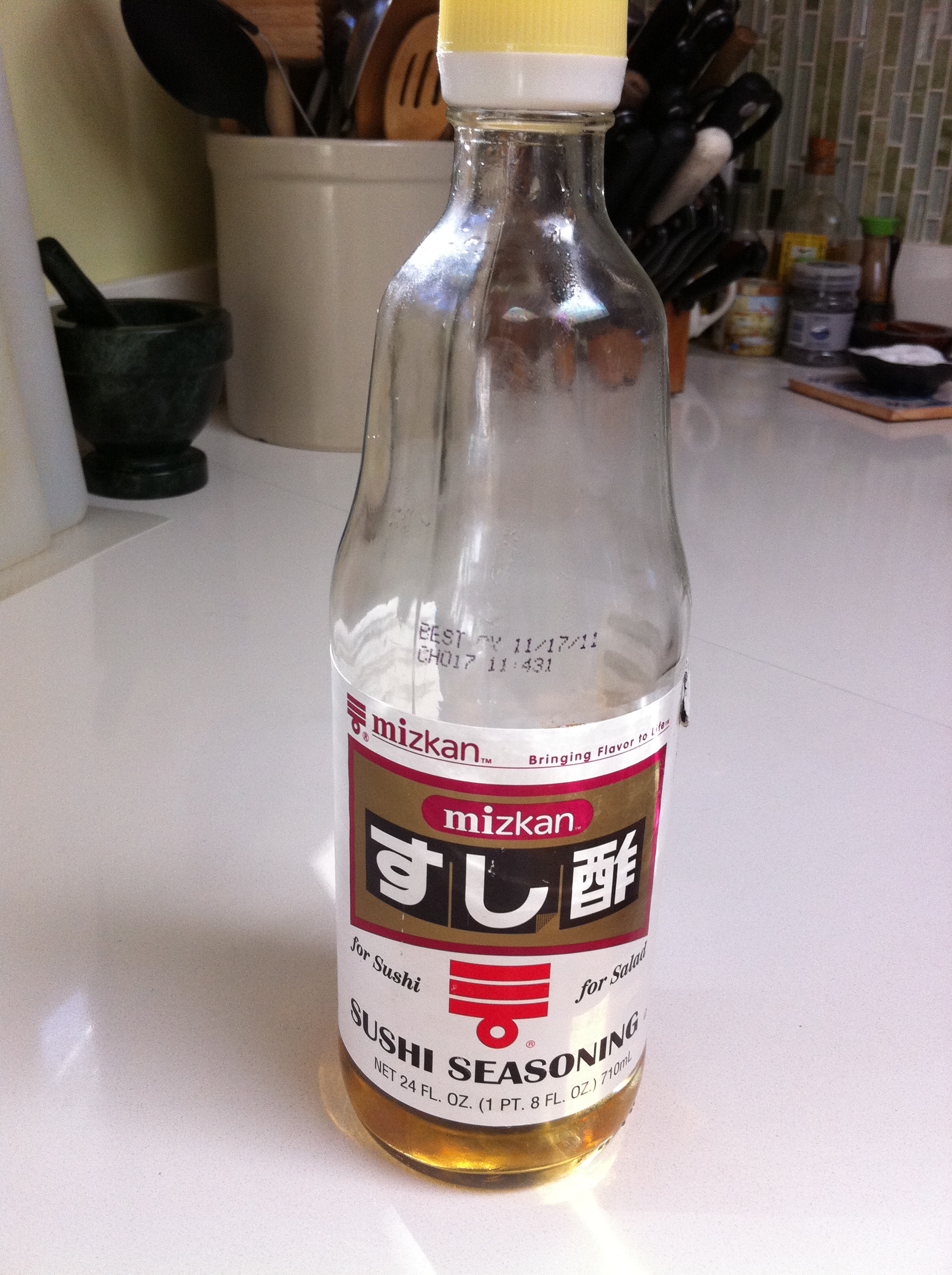
Japanese sweetened rice wine vinegar
This is my go-to vinegar for nearly everything. Its light flavor and slight sweetness make it bring out the best in whatever it is flavoring or dressing. You’ll see this often in my recipes. You can find it at most grocery stores, in Japanese markets, at Trader Joe’s or online.
The Most Exotic Vinegars
Chinese black vinegar and dilluted red vinegar
Chinese vinegars are among the most floral and exotic of all. Black vinegar tastes of caramel, spice and tamarind. Red vinegar has one of the most interesting flavors of all, although the main thing I use it for is dim sum pork dumplings. These vinegars can be found in Asian markets or online.
The Funnest Vinegar
Malt vinegar
I’ve awarded this vinegar “funnest” simply because it reminds me of being in a pub and eating fish & chips. And what’s more fun than that!? Widely available at supermarkets.
The Most Expensive Vinegar
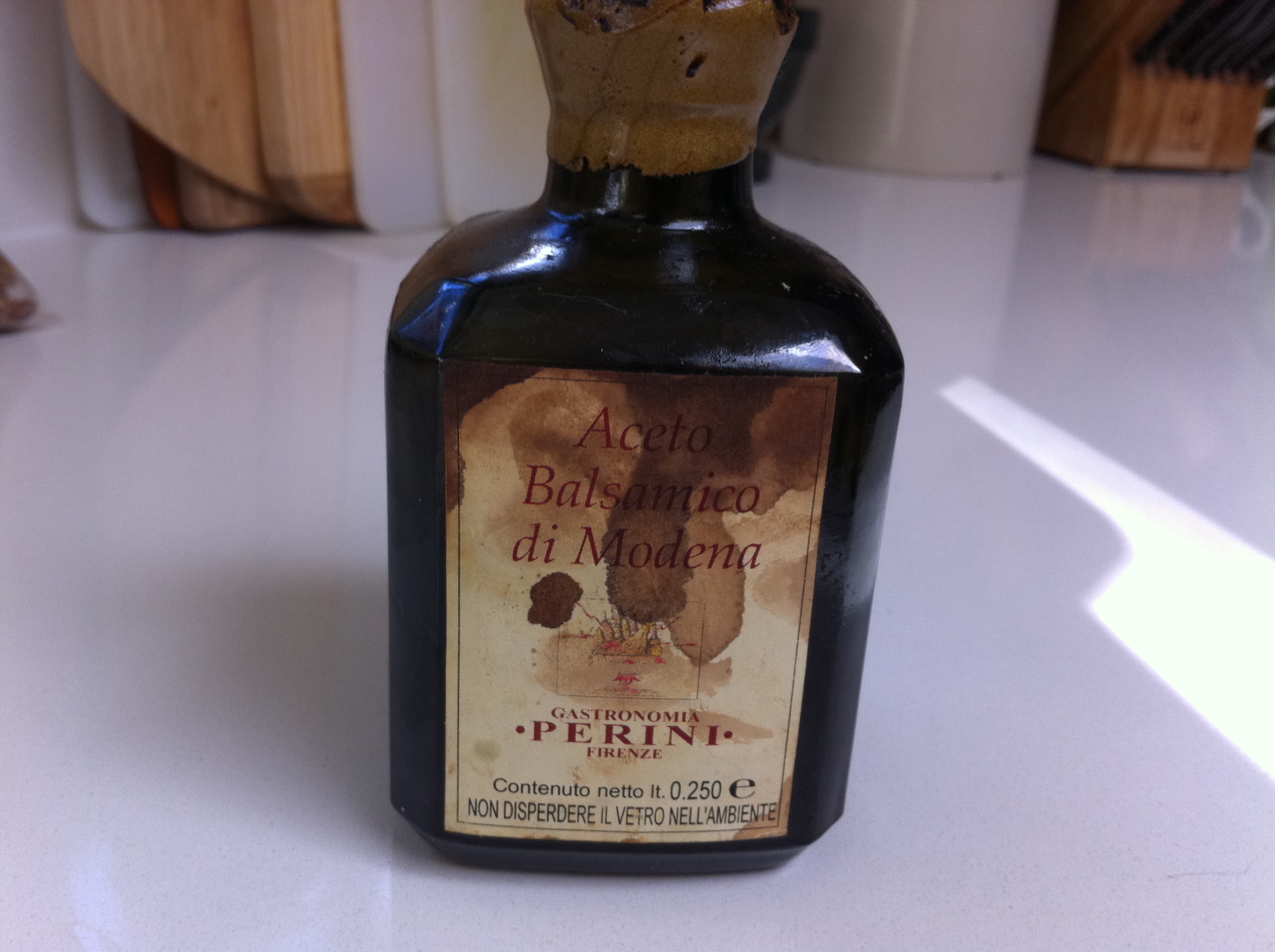
Aged balsamic
People will pay you to hang onto your product for a long time before you sell it. This balsamic was aged 25 years, and probably cost a small fortune. (It was a gift, you see.) Like a long-aged wine, it’s flavors are gentle, nuanced and complex. I wouldn’t really recommend this for anyone but the most fervent balsamic devotee, as the average person would be unlikely to tell the difference in a salad. (Myself included.) Buy in Italy, if you must.
The Most Mexican Vinegar
Apple cider vinegar
This is the vinegar I use in any Mexican dishes requiring vinegar. It’s got a nice appley flavor. It’s also great in marinades and sauces for barbecue. Widely available.
The Second Most Useful Vinegar
Red wine vinegar
Your basic red wine vinegar, available everywhere. Great for vinaigrettes and lightly dressed salads such as Cobb salad.
Balsamic Redux
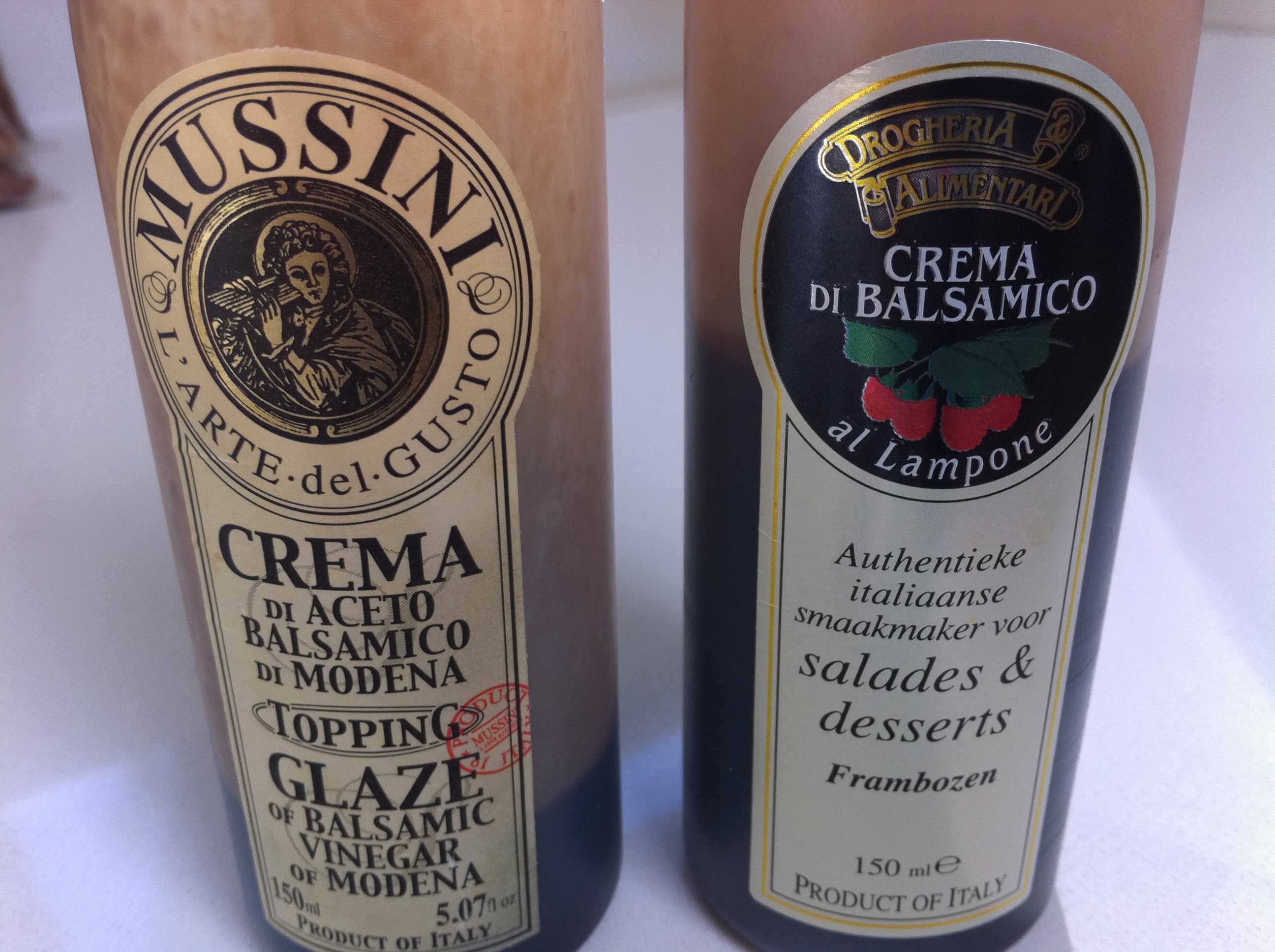
These thickened balsamic products are basically quick and easy versions of a balsamic reduction, which you’ll often find decorating a plate in a fancy Italian joint. (Those little gooey dots all over the plate.) They essentially serve the same decorative function in my cooking that kecap manis (profiled in an earlier post) does. These were a gift someone brought me from Italy, but you can find them online or in fine Italian grocers.











 skinny girls & mayonnaise