Dinner in Havana

A smoky bar and stiff rum drink. A slow lusty mambo playing in the background. Late afternoon light spilling in from the open door, people outside bustling past or standing in the shadows of arched doorways speaking Spanish. A dark woman in a white cotton dress eying you from a corner table. (Or handsome dark-eyed man in a fedora, if you’re a gal.) Suddenly, you realize you’re a little drunk. And hungry.
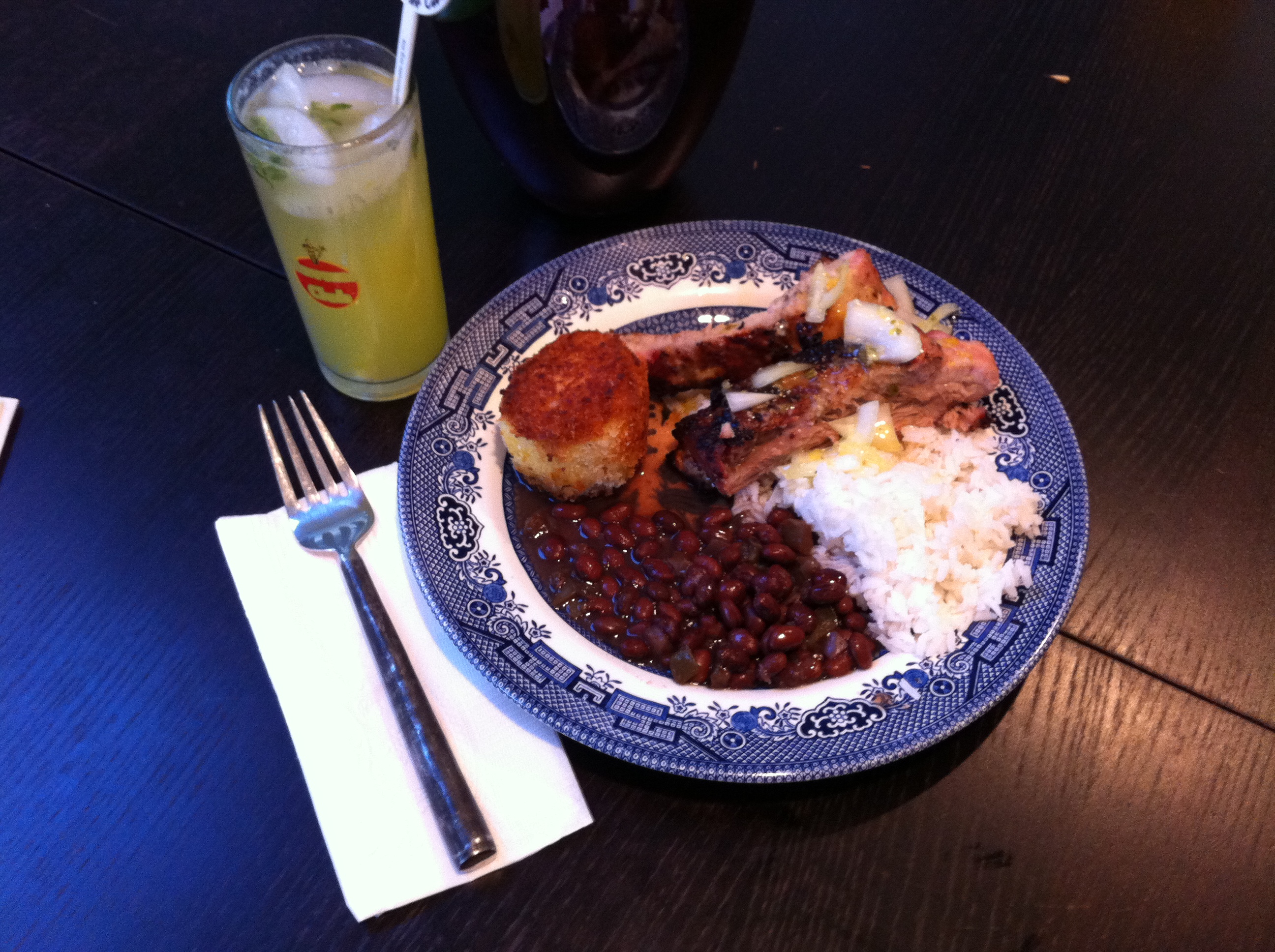
Papas rellenas, costillitas, beans and rice and a mojito.

If you were to go out for dinner in Havana, you would likely wind up in a private home at a “paladar” — restaurants people have set up in their living rooms or on their balconies, serving homecooked food. Your choices are that or a government-run restaurant. (Imagine eating at a government-run restaurant in a U.S. DMV or passport office… you’d be dreaming of Olive Garden or Sizzler…)

I’ve never been to Havana. I’ve contemplated sneaking in… but figured instead I’d just wait and go with everyone else, once the embargo has been lifted and the Disneyfication has begun. But sometimes I put on Buena Vista Social Club, light a Cuban cigar I smuggled in from Mexico, make some firm mojitos and cook up some Cuban food. Costillitas, in particular — Cuban-style ribs on the grill. These may be the best ribs on earth. Better than St. Louis, better than Tuscan arrosto misto, better even than Hawaiian… (I’ll teach you how to make ALL these in due time, my friends…) And papas rellenas, potato puffs stuffed with spiced beef — a dish I first had at a Cuban restaurant in Madrid. And of course, rice and beans.

The following recipes will serve 4-6, making for a nice Havana-style dinner party in your own paladar. Mojitos recipe included!

*   *   *

Costillitas

1 rack baby back ribs
1 cup orange juice
juice of one lime
6 large garlic cloves, mashed
1 onion, sliced lengthwise into slivers
1 tsp oregano
salt & pepper

Remove the sheathy membrane from the back side of the ribs (to do this, slip a flat-head screwdriver between the membrane and the bone, and peel off). Cut the rack into segments of 3-4 ribs each, and salt the ribs well for about an hour.

To “mash” the garlic, you can use a mortar and pestle. Or you can grate the cloves on the fine grate of a cheese grater. Combine the garlic with the juices, the onion and the oregano in a bowl. Set aside 1/3 of the juice mixture for later. Place ribs in a large roasting dish and marinate with citrus/garlic mixture for an hour at room temperature. (Or several hours in the fridge.)

Get your grill good and hot. Then cook the ribs, turning frequently and basting with marinade, for about 40 minutes, or until golden brown. Serve over rice, drizzled with the reserved citrus/garlic mixture and onions, with Cuban-style beans. (Recipe below)

Papas Rellenas

1 large russet potato, peeled and quartered
1/2 lb ground beef
1 small onion, chopped
1 tbsp tomato paste
1 tbsp chopped green olives
2 eggs
panko bread crumbs
vegetable oil for frying
salt & pepper

Boil potatoes until cooked. Cool and mash in a bowl. Separate egg whites from yolks. Add yolks to potatoes with salt and pepper, and blend thoroughly. Meanwhile, cook ground beef in pan with chopped onion, tomato paste, olives and salt and pepper until browned. Remove from heat and cool.

Whip egg whites in a bowl until frothy. To make papas rellenas, scoop a large tablespoon of potato mixture into the palm of your hands and flatten. Place a teaspoon of the beef mixture into the middle of the potato, then close potato around it to form a ball. Dip the ball in the whipped egg whites, and then in panko to coat thoroughly. In a saucepan, heat about 1/4 inch of oil over medium-high heat. Cook the papas rellenas, a few at a time, turning frequently until browned on all sides. Remove and keep warm until all are cooked and ready to serve.

Cuban-style black beans

1 cup dried black beans, soaked overnight
1 bay leaf
1 chopped onion
1 chopped green pepper
salt & pepper

Cover beans in 3 cups of water. Add bay leaf, chopped onion and green pepper. Bring to a boil in a pot, then lower heat and cover. Cook for 2 hours or until tender, adding more water as necessary (beans should be saucy). Once beans are tender, add salt and pepper to taste and serve.

Mojitos
for each drink:

Juice of two limes
2 heaping tablespoons sugar
4 or 5 mint leaves
1 ounce light rum
fizzy water

Combine lime juice and sugar and stir until sugar dissolves. Place in a tall glass with mint leaves, and toggle with a chopstick or back of a knife, bruising leaves to release oils. Add rum and ice, then fill drink with fizzy water. Serve with a stirrer.
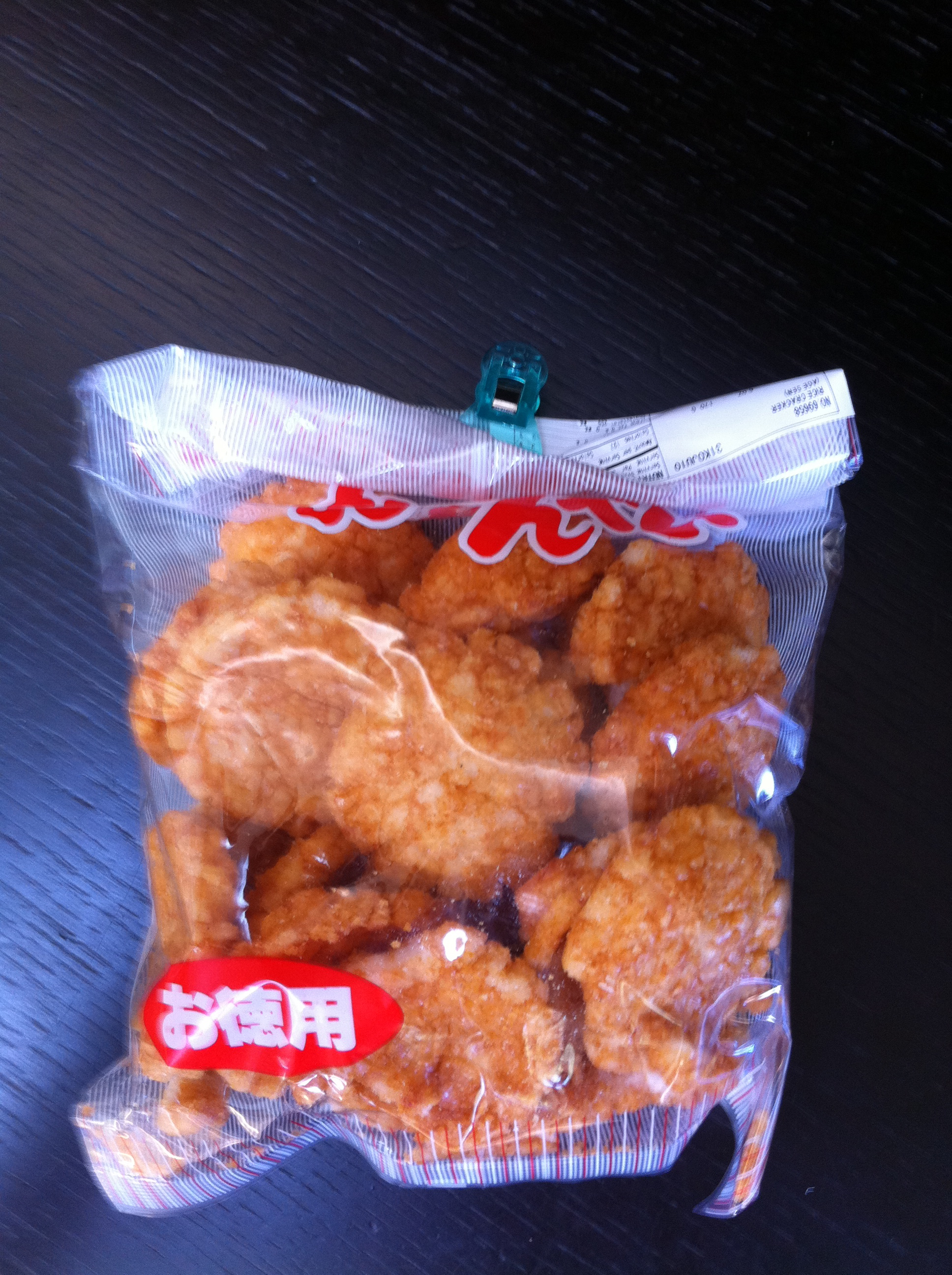
Japan’s Crack Snacks

We call them “crack” snacks, because they’re so good that they’re addictive. And you’ll find yourself plotting ways of hiding the half a bag that’s left from your spouse and kids because you want them all for yourself.

In short, they bring out the worst in you. But man, are they tasty.


Some crack snacks I bought yesterday that my wife has already gotten into


Why is it that the Japanese make snacks that are so much better than our snacks? I don’t know. They’re sometimes salty and sometimes kinda sweet and sometimes both at once. Sometimes they have a little MSG in them, which unless you’re allergic to you can live with.

I first encountered these rice cracker snacks when I was in Tokyo. I went into a convenience store and bought a whole bunch of bags of them to bring home. I didn’t know what any were, since I can’t read Japanese. Some had strange things in them like busted up little crabs or powdered squid. (You can usually avoid those kinds if you want to because they’ll have little pictures of crabs or squids on them … I realized later). Some are spicy with chili, others made with sweet nori seaweed.

How do you know which ones to get? You don’t. Just get the ones that look best to you. And where do you get them? I get mine at the Japanese markets here in Los Angeles — the Nijiya Market on Sawtelle or in Little Tokyo, and the Mitsuwa Market on Venice and Centinela. If you’re in a city you can find them in your own Japanese market. Otherwise, have fun online at asianfoodgrocer.com (look under “Pocky, Snacks & Candy” and click “Rice Crackers”).

In the meantime, come Japanese snack shopping with me:

I Believe in the Bean

If you’ve read much of this blog, you know that I’m a big fan of beans.

I like all kinds of beans — soupy black beans with garlicky, citrussy Cuban food (that’s the next post, so stay tuned), earthy borlotti beans from Italy (see two posts back), big meaty faba Asturiana beans from Spain, delicate and floral flageolets from France, fermented Chinese black beans, edamame, Mexican pinto beans…

Today I’m writing — or actually talking — about cannellini beans. In the following video, I’ve cooked a pot of these versatile beans, and prepared them four different ways… so you get an idea of how easy they are to make, and how many different things you can do with them. Of these four preparations, I’ve created two in an Italian style, one Spanish and one French. All take no more than a few minutes to make, once you’ve actually cooked the beans. You can even cook a big batch of beans and keep them in the fridge for a week or so, and make different bean dishes on different nights. Enjoy!

Good Gadget, Bad Gadget, Pt. II

There’s a whole industry based on creating useless gadgets. I may have to get creative and come up with something myself. Get a piece of that business. Seems people actually buy these things.

I was embarrassed to discover some bad gadgets in my own kitchen drawers… must’ve been gifts.

A little brush to brush... uh, something off?

More

Me & Mr. Bean

“When young professionals and the socially hip raise chickens in their backyards, newspapers do articles with slideshows. When us Mexicans do it? People call code enforcement.” — Gustavo Arellano

So it must be for the resourceful peasants of Italy when they see their leftover bean soups appearing on the menus of fashionable trattoria in New York and Los Angeles. Something born of necessity and created from leftovers in Tuscany became something craved by starlets after their yoga class in Santa Monica.

Ask a hundred Italians how to make it, and you’ll get a hundred different recipes. And they’ll all be equally good. I’ve had countless variations of this soup in Italy, and in the states. I’ve made countless variations — some with bread, some with carrots and meatballs, meatless variations for vegetarians, and so on. Here’s a simple recipe that’s sure to please your guests. If you don’t eat meat or if you’re having yoga students over, leave out the pancetta. It won’t be quite as good. But that’s the burden you’ll have to carry…

*  *  *

Sopa de Fagioli
Serves 4 -6

1 quart chicken stock
1 cup borlotti beans (or cannellini or red kidney beans)
A few slices of pancetta or bacon, chopped up
1 onion
1 cup roughly chopped cavolo nero (Tuscan kale)
1 sprig rosemary
1/2 cup small pasta (orrechiete, macaroni, etc.)
1/4 cup olive oil, plus extra for drizzling
salt & pepper to taste

Soak the borlotti beans over night. Then cook covered in water over medium heat for about an hour to an hour and a half, or until tender (add more water if needed). Simmer until most of the water is gone, and turn off heat.

Cook the pancetta in half the olive oil (1/8 cup) in a small pan over medium heat until it is well cooked, but not crisp. Add chopped onion and rosemary and cook for a couple minutes until onion is golden. Remove rosemary. Add onion/pancetta mixture to the chicken stock, along with the kale and the beans. Add remainder of olive oil, and bring to a simmer over medium heat. Add dried pasta, cover, and cook over medium low for about 30 minutes, stirring occasionally. Season with salt to taste.

To plate, ladle a good scoop or two of the soup into a bowl, drizzle with more olive oil and top with a twist of freshly ground black pepper. You could also add a sprinkle of crushed red pepper to give it a little heat, or sprinkle some parmesan over the top for an additional layer of flavor. Enjoy!

And here’s a fun kids outtake:

Previous Older Entries Next Newer Entries