You’re a What-atarian?

I was at a dinner party talking to my friend Jon, who was poking at a plate of quinoa.

“What is this?” he asked.
“Quinoa,” I said.
“What’s quinoa?”
“Yoga food,” I said.
“Is it pasta?”
“It’s a grain,” I said.
“Spell it.”
“Q-U-I-N-O-A”
He asked if our friend had grown it in her garden. I excused myself. Over by the stove, a gal was looking at the Venetian bean soup I had brought.

“Is there meat in it?” she asked.
“Yes, pancetta,” I replied. She looked puzzled. “It’s like Italian bacon.”
“Oh,” she breathed a sigh of relief. “I’m a vegetarian. But the exception is pork.”
My kind of vegetarian.

Although it seems a somewhat cut-and-dry concept, you meet many different kinds of vegetarians. I was doing a cooking workshop for my friend’s Girls Gourmet Group the other night. I should’ve researched their eating preferences first. I held up a dead chicken soon to be Moroccan chicken with preserved lemon and olives, and they all looked mortified. Turns out three of the five girls are vegetarians, and one is a “sometimes, mostly” vegetarian. (Which meant I had a window with the chicken for her…) But the three were not “strictly” vegetarian, as they had gobbled down a catch of fish last time I cooked with them.

“So you eat meat that swims but not that flies or walks?” I asked by way of clarification.
“Right,” they said.

I think some people are vegetarians for moral reasons, and others for dietary reasons. Some are vegetarians for proximity reasons (i.e. they’re partner is a vegetarian). I’ve always admired vegetarians. I love the idea that nothing was killed in the making of your meal. But I also love meat. More.

There are those people on the fringe who think that the plant cries a silent scream when you pull it from the earth. What do those people eat?

When we eat meat at our house, we (usually) eat very small quantities. A few ounces each of Kobe beef, a couple thin slices of pancetta in a pasta, etc. I think if the carnivore world at large took a more ethical approach to meat — eat less of it, know where your meat comes from and that the animal had a good life — the world would be a much better place on many levels.

I never could’ve married a vegetarian. Except, maybe, for that pork vegetarian.
What Do Chickens Fear?

I often have to suffer the suspicious stares of my chickens when I grill.

For your information, our girls are pets and egg layers only. But I’m not sure they’re so sure.

The Sad Fall of Dar Maghreb

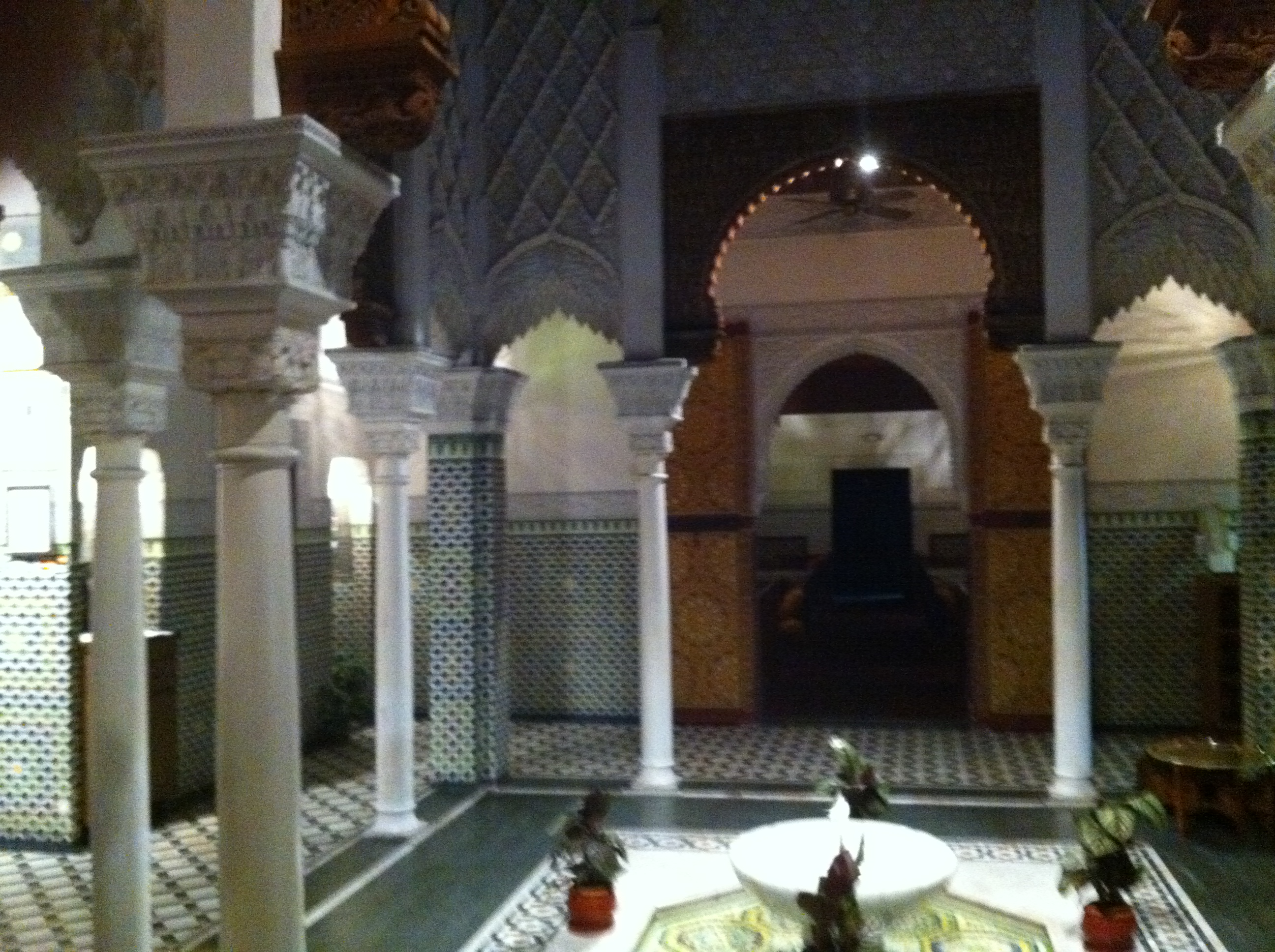
Once upon a time in West Hollywood, long before Lucques and Mozza, there was the most exotic, exciting dining experience in Los Angeles — at least for a kid with wanderlust and an adventurous palate. The Moroccan palace of Dar Maghreb.

The courtyard at Dar Maghreb

I had the good fortune, growing up, that my father was best pals with the owner and driving creative force behind Dar Maghreb. Pierre Dupar was a corpulent caricature of a French chef in the best and worst ways. When it came to food and wine, he could be generous, funny and full of heart, sharing a vintage year Mouton Rothschild with a 20-something kid with an interest in wine like me, or inviting my father on tours of the Michelin 3-star restaurants of France — and printing up business cards for him that said he was a food critic with a non-existent Los Angeles food publication. And he could be heartless, ordering his workers about like they were pack animals, making unreasonable demands of his young hispanic wife like she was his maid (which she was before he married her), belittling his children in front of others. The restaurant was his great love — he even designed the architecture himself, and welcomed guests in his flowing robe like a proud papa.

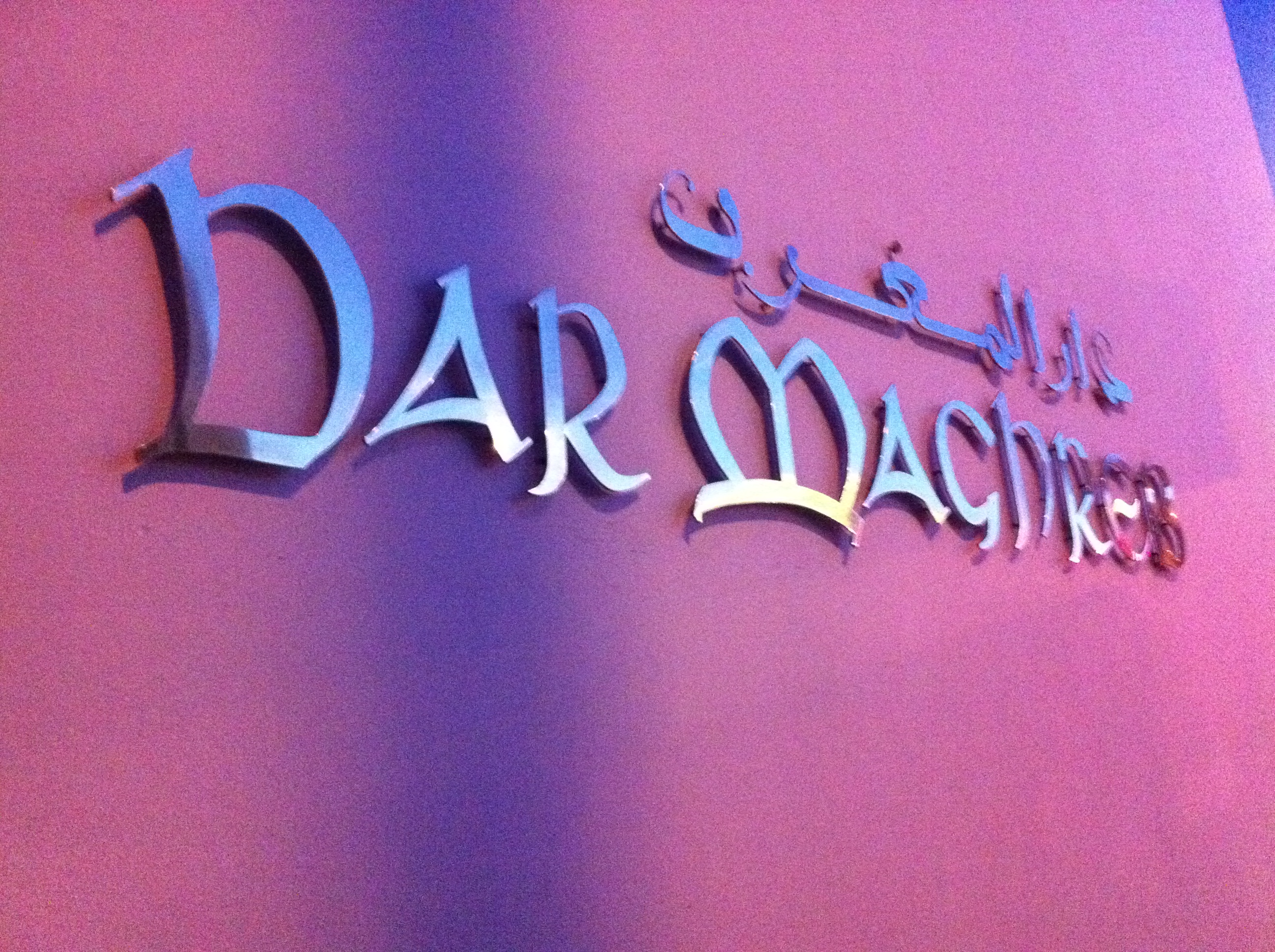
And Dar Maghreb was among the proudest buildings in the city. From the outside, a gorgeous stucco square with desert palms and nothing to let you know what it was but a bold swatch of silver Arabic on the wall. Pass through the gilded silver doors, and you were a world away from the seedy buzz of Sunset Boulevard just outside. A fountain bubbled peacefully in the middle of an interior courtyard. In high-ceilinged rooms to the right and left came jovial conversation, the scent of roasted meats and cinnamon, and the sound of finger cymbals being clanged by busty belly dancers. And Monsieur Dupar, always Monsieur Dupar, with a hearty welcome and shake of his fat hand.

Fast forward a couple decades, and we decide to take my son, Flynn, to Dar Maghreb for his 7th birthday. We invited my father. Monsieur Dupar is now at the Great Table in the Sky, ordering celestial servants around. He had a massive coronary on an airplane between Bordeaux and Amsterdam. Minus his robed presence inside those sparkling silver doors, Dar Maghreb feels sad and forlorn. The seven-course meal and belly dancing has become a cliché, the Arabic writing on the building now sits astride the English translation, “Dar Maghreb,” as if the restaurant either felt neglected and needed to remind people it was here, or maybe they wanted to prevent vandalism from people who mistook the building for a mosque. How the times have changed. The waiters are now Chinese. And what used to be a bustling, thrilling restaurant was now almost empty on a Thursday night even as Hollywood pulsed frenetically outside. I almost expected to hear the requisite crickets on cue.

The sugary savory bastilla, the fragrant carrot and eggplant salad scooped up with sesame bread, the roast chicken with lemon and olive to the final sip of mint tea all still taste just as good, if tinged with a melancholy aftertaste at the gaping absence of Pierre Dupar. And the kids loved the entire experience. But my dad looked a little sad, and I couldn’t help but have the feeling you get when you see a performer 30 years beyond their prime, still belting out their one hit song to no one in particular in a lounge at an airport Holiday Inn.

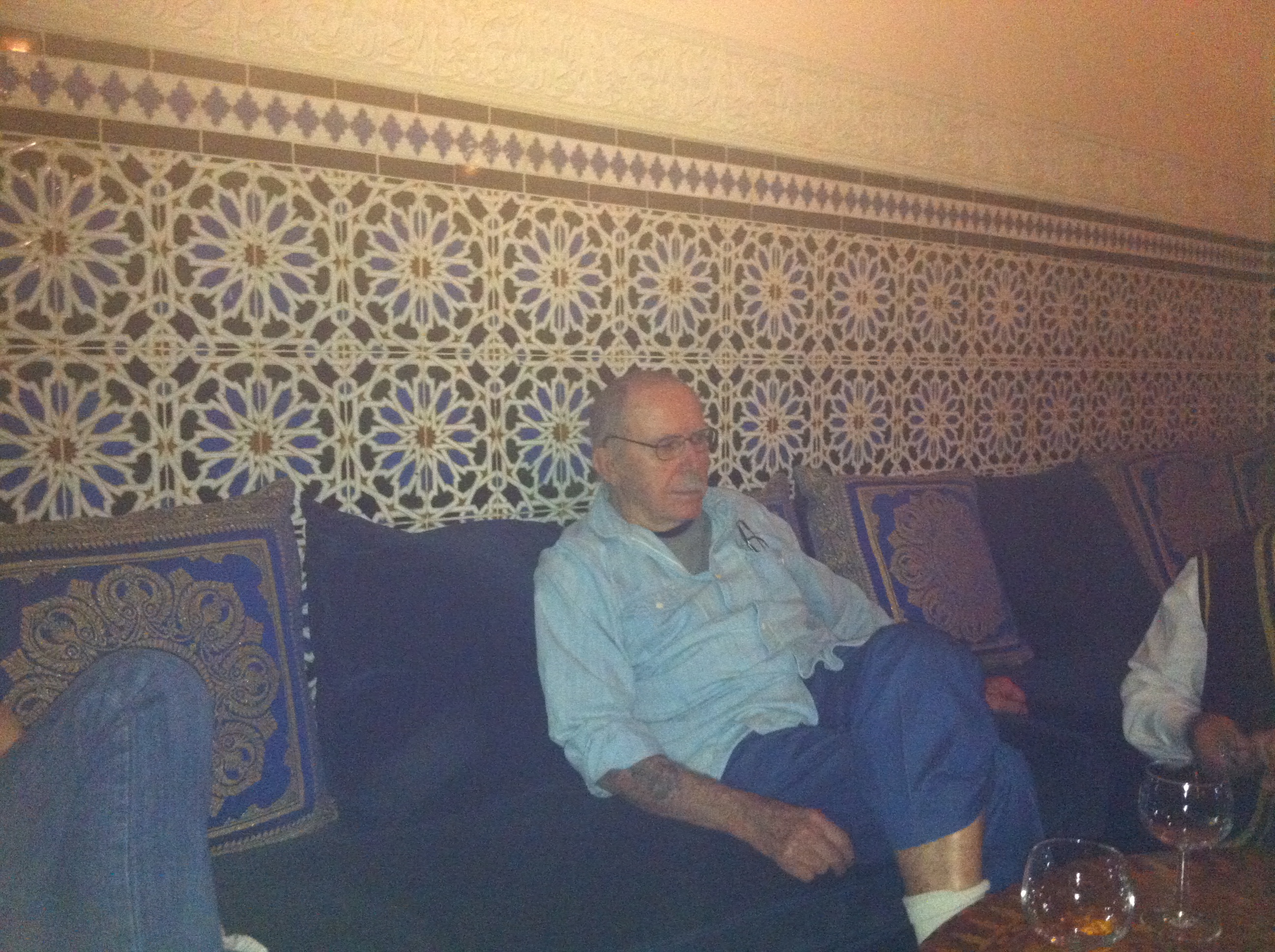
Dr. Colgin at Dar Maghreb

The last time I was at Dar Maghreb was five or six years before, for Pierre Dupar’s memorial. It was sad to say goodbye to Pierre and to know we would never again see him welcoming us into that courtyard. Maybe we’ll go back to Dar Maghreb again, or maybe we won’t. This felt a bit like a goodbye, too.

Me & Mr. Bean

“When young professionals and the socially hip raise chickens in their backyards, newspapers do articles with slideshows. When us Mexicans do it? People call code enforcement.” — Gustavo Arellano

So it must be for the resourceful peasants of Italy when they see their leftover bean soups appearing on the menus of fashionable trattoria in New York and Los Angeles. Something born of necessity and created from leftovers in Tuscany became something craved by starlets after their yoga class in Santa Monica.

Ask a hundred Italians how to make it, and you’ll get a hundred different recipes. And they’ll all be equally good. I’ve had countless variations of this soup in Italy, and in the states. I’ve made countless variations — some with bread, some with carrots and meatballs, meatless variations for vegetarians, and so on. Here’s a simple recipe that’s sure to please your guests. If you don’t eat meat or if you’re having yoga students over, leave out the pancetta. It won’t be quite as good. But that’s the burden you’ll have to carry…

*  *  *

Sopa de Fagioli
Serves 4 -6

1 quart chicken stock
1 cup borlotti beans (or cannellini or red kidney beans)
A few slices of pancetta or bacon, chopped up
1 onion
1 cup roughly chopped cavolo nero (Tuscan kale)
1 sprig rosemary
1/2 cup small pasta (orrechiete, macaroni, etc.)
1/4 cup olive oil, plus extra for drizzling
salt & pepper to taste

Soak the borlotti beans over night. Then cook covered in water over medium heat for about an hour to an hour and a half, or until tender (add more water if needed). Simmer until most of the water is gone, and turn off heat.

Cook the pancetta in half the olive oil (1/8 cup) in a small pan over medium heat until it is well cooked, but not crisp. Add chopped onion and rosemary and cook for a couple minutes until onion is golden. Remove rosemary. Add onion/pancetta mixture to the chicken stock, along with the kale and the beans. Add remainder of olive oil, and bring to a simmer over medium heat. Add dried pasta, cover, and cook over medium low for about 30 minutes, stirring occasionally. Season with salt to taste.

To plate, ladle a good scoop or two of the soup into a bowl, drizzle with more olive oil and top with a twist of freshly ground black pepper. You could also add a sprinkle of crushed red pepper to give it a little heat, or sprinkle some parmesan over the top for an additional layer of flavor. Enjoy!

And here’s a fun kids outtake:

Teach Your Children Well

This is a post for parents. And for those who are childlike at heart. Because it is in approaching food with a childlike joy and wonder that your cooking will be transformed. And your eating.

Of course, any parent will tell you that children don’t always approach food with a childlike joy. When my son, Flynn, was young. I used to make him baby risottos. They were so good and he loved them so much that we thought of starting a baby food company. But then something happened. He switched. He was suspicious of everything I made. “Dad, there’s a dot in my food!” he would squeal in terror, and the simplest dishes would be derailed by a speck of pepper or a stray trace of parsley.

I was crestfallen.

A chef. And my first-born son would eat nothing but chicken nuggets.

The question, of course, was how to ever get him eating interesting food again. The answer was simple, if not exactly quick. Introduce him to the joy of growing, shopping, cooking and eating. And get him involved. Are your kids involved? Are YOU involved??

I expanded the garden, and gave Flynn his own tomato and corn plants. I got chickens, and put him in charge of egg collection (he now has an egg business selling them in the neighborhood — need any really GOOD eggs? Call Flynn…) My sister got him his own cookbook for his birthday — what a gift! Sometimes I find him sitting on the couch on a Saturday afternoon reading his cookbook. Sometimes he and I watch the cooking shows on PBS on Saturday afternoon. Sometimes we make what we’ve seen.

And I began to request his help in the kitchen. I would let him chop things — supervised, of course — with my really cool, sharp chef’s knife. (Chef’s knives are enticingly exciting to kids, especially boys.) I let him stir sauces. I let him toss the pizza dough in the air. And anytime he wanted a bite of something, I gave it to him.

While he’s still not eating EVERYTHING, there are few things he won’t try. And he’s had the experience enough times of enjoying something wonderful he didn’t want to try, that he believes me when I say, “No, seriously… you’re gonna LOVE this!” Plus, he learned to love the experience of sourcing our food. We go on food adventures. To Little Tokyo to get imagawayaki hot off the grill. To the cheese shop in Beverly Hills. To East L.A. to get handmade tortillas.

Flynn wants to go to France to try the stinky cheeses there. I heard him telling a friend in his taekwondo class the other day about the shabu shabu we were having for dinner that evening. “No,” he explained, his hands gesticulating animatedly, “you cook it right on the table!”

Have you made food an adventure for your children? First, of course, you must make it an adventure for yourself. I guess that’s really what this blog is all about. We’re all kids at heart. Life should always be approached with bright-eyed wonder, as an adventure. And in life, food is one of the greatest adventures of all.

Previous Older Entries Next Newer Entries