You’re a What-atarian?

I was at a dinner party talking to my friend Jon, who was poking at a plate of quinoa.

“What is this?” he asked.
“Quinoa,” I said.
“What’s quinoa?”
“Yoga food,” I said.
“Is it pasta?”
“It’s a grain,” I said.
“Spell it.”
“Q-U-I-N-O-A”
He asked if our friend had grown it in her garden. I excused myself. Over by the stove, a gal was looking at the Venetian bean soup I had brought.

“Is there meat in it?” she asked.
“Yes, pancetta,” I replied. She looked puzzled. “It’s like Italian bacon.”
“Oh,” she breathed a sigh of relief. “I’m a vegetarian. But the exception is pork.”
My kind of vegetarian.

Although it seems a somewhat cut-and-dry concept, you meet many different kinds of vegetarians. I was doing a cooking workshop for my friend’s Girls Gourmet Group the other night. I should’ve researched their eating preferences first. I held up a dead chicken soon to be Moroccan chicken with preserved lemon and olives, and they all looked mortified. Turns out three of the five girls are vegetarians, and one is a “sometimes, mostly” vegetarian. (Which meant I had a window with the chicken for her…) But the three were not “strictly” vegetarian, as they had gobbled down a catch of fish last time I cooked with them.

“So you eat meat that swims but not that flies or walks?” I asked by way of clarification.
“Right,” they said.

I think some people are vegetarians for moral reasons, and others for dietary reasons. Some are vegetarians for proximity reasons (i.e. they’re partner is a vegetarian). I’ve always admired vegetarians. I love the idea that nothing was killed in the making of your meal. But I also love meat. More.

There are those people on the fringe who think that the plant cries a silent scream when you pull it from the earth. What do those people eat?

When we eat meat at our house, we (usually) eat very small quantities. A few ounces each of Kobe beef, a couple thin slices of pancetta in a pasta, etc. I think if the carnivore world at large took a more ethical approach to meat — eat less of it, know where your meat comes from and that the animal had a good life — the world would be a much better place on many levels.

I never could’ve married a vegetarian. Except, maybe, for that pork vegetarian.

What Do Chickens Fear?

I often have to suffer the suspicious stares of my chickens when I grill.

For your information, our girls are pets and egg layers only. But I’m not sure they’re so sure.

“Better Cooks, Not Just Recipe Followers…”

I was preparing a cooking workshop for a group of women later this week, and got thinking about exactly what it was I was trying to teach them, beyond the type of food they had requested…

A friend of mine recently gave me a cookbook, “Serious Barbecue” by Adam Perry Lang. After perusing various recipes, I turned to the introduction. Lang talked about learning to cook in culinary school and famous French kitchens, and then re-learning from Texas-born ranch hands on a ranch in New Mexico. “My new friends,” he said, “were as passionate as any of the professionals I’d met in French kitchens.” In reflecting on his journey and his reason for writing the cookbook, it was, as he said, to teach people “to be better cooks, not just recipe followers.”

Not trash.

This phrase stood out brilliantly to me. For it is exactly what I’m trying to do with this blog. And with my teaching of other people. I’m trying to do this myself with every meal I prepare — be a better, more mindful cook. When a friend invites us over for a roasted chicken she’s purchased from Costco, and I ask if I can keep the carcass when we’re done, it’s not because I’m weird (despite the startled look on her face); it’s because (as I will explain to her) this roasted chicken is filled with flavor and will make an insanely good stock. And then I leave the bones to her and explain to her how to do it. That is not a recipe, that is cooking.

Next time you’ve get a roasted chicken from Costco or Zankou or wherever — or roast one yourself — when you and your kids are done picking it over, throw the carcass in a big pot with enough water to cover, an onion, a bay leaf and a couple tablespoons of salt, an cook for about an hour. Then strain. You’ll see what I mean — this ain’t Campbells, and you made it with something you were going to throw out. (And you can freeze the stock in plastic baggies in the fridge to make soup whenever the spirit moves you.) This is respecting the animal that gave its life for your meal. This is cooking.

When I was in my 20s teaching English, I decided I didn’t like teaching very much. But now I find I love it. Maybe I just wasn’t teaching the right subject.

Sonoma Market Breakfast

One sparkling winter Sunday morning in Sonoma County, as mist rose from frozen fields through the bare leaves of apple trees, with my wife and kids, my mom and the Wine Guerrilla and miscellaneous sisters, we went to a favorite spot for breakfast. Willow Wood Market Café in the tiny one-horse town of Graton. If you’re ever hungry and meandering along the Gravenstein Highway north of Sebastopol some morning, I suggest you hang a left on Graton Road and do the same.

Unraveling scarves and jackets as we settled around a large table, the comforting scent of sausage and coffee filled the sunlit room. Browsing the menu, my eyes gravitated toward the usual suspects: steak and eggs, smoked salmon, french toast and sausage. And then I spotted an interesting choice: the “market plate breakfast”. Warm polenta, a farm fresh egg, spinach cooked with coppa, roasted tomatoes and camboloza toast. It was a surprisingly harmonious symphony of morning flavors — even the things you wouldn’t expect on a breakfast menu like spinach and blue cheese.

Your kids might screw their noses up at this breakfast, as mine did. That’s just fine… give them Eggos, and save this gem for the grown ups. Did I mention it’s the perfect brunch, particularly when served to friends with a good, spicy Bloody Mary? Cheers.

*   *   *

Sonoma Market Breakfast
Note: for my version, I like two eggs per and use pancetta instead of coppa

for each breakfast:

2 eggs
1/4 cup dried fine polenta
1/2 cup spinach
1 slice pancetta
5 or 6 heirloom cherry tomatoes
1 slice crusty bread
1 slice (or 1 tbsp crumbled) blue cheese such as cambozola or gorgonzola
extra virgin olive oil
salt & pepper

Cook the polenta first: use 2x the water of the dried polenta you are cooking. Heat the water to a boil and add polenta, lowering heat to medium-low. Cook polenta, stirring every few minutes and adding water as it cooks away, for 20 minutes until thick. Cover and set aside.

While the polenta is cooking, roast the tomatoes. Make a little pan out of foil, add the tomatoes and drizzle with olive oil and sprinkle with salt. Cook about 20 minutes at 350 degrees.

For the spinach, cut each slice of pancetta into a few pieces, and saute until rendered and crisp in a tbsp or so of olive oil. Add spinach and cook briefly until wilted. Toast your bread slices and top with a little blue cheese while still hot.

Lastly, cook your eggs. They served poached eggs at Willow Wood, I like to fry them in a pan with a single flip. To compose your Market Breakfast, place some polenta on a plate with the tomatoes and cooking oil drizzled over the polenta. Put the spinach and pancetta next to the polenta, and the eggs next to that. Put a slice of toast on each plate, sprinkle some good sea salt and pepper over the top, and serve.

The Sad Fall of Dar Maghreb

Once upon a time in West Hollywood, long before Lucques and Mozza, there was the most exotic, exciting dining experience in Los Angeles — at least for a kid with wanderlust and an adventurous palate. The Moroccan palace of Dar Maghreb.

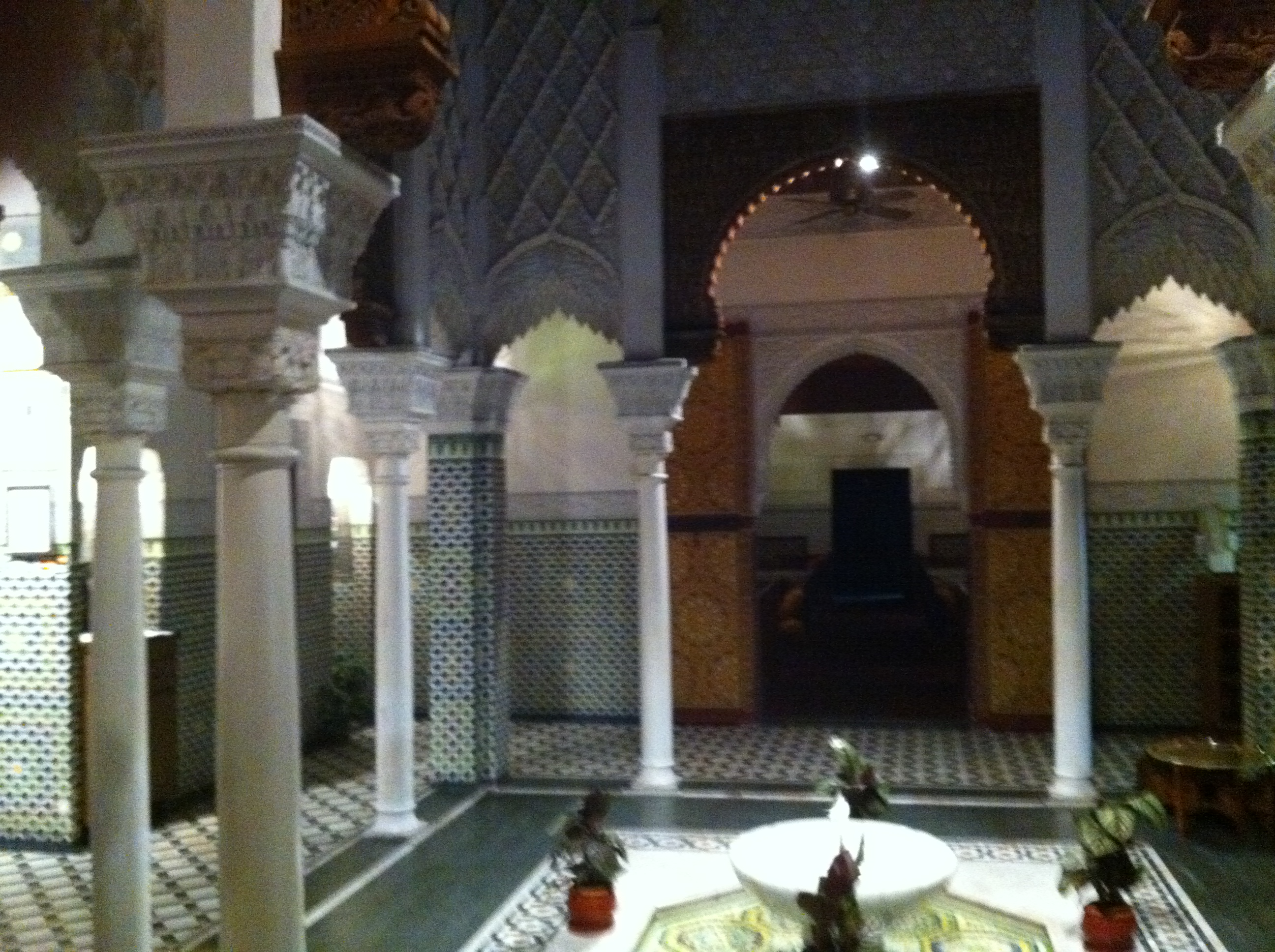
The courtyard at Dar Maghreb

I had the good fortune, growing up, that my father was best pals with the owner and driving creative force behind Dar Maghreb. Pierre Dupar was a corpulent caricature of a French chef in the best and worst ways. When it came to food and wine, he could be generous, funny and full of heart, sharing a vintage year Mouton Rothschild with a 20-something kid with an interest in wine like me, or inviting my father on tours of the Michelin 3-star restaurants of France — and printing up business cards for him that said he was a food critic with a non-existent Los Angeles food publication. And he could be heartless, ordering his workers about like they were pack animals, making unreasonable demands of his young hispanic wife like she was his maid (which she was before he married her), belittling his children in front of others. The restaurant was his great love — he even designed the architecture himself, and welcomed guests in his flowing robe like a proud papa.

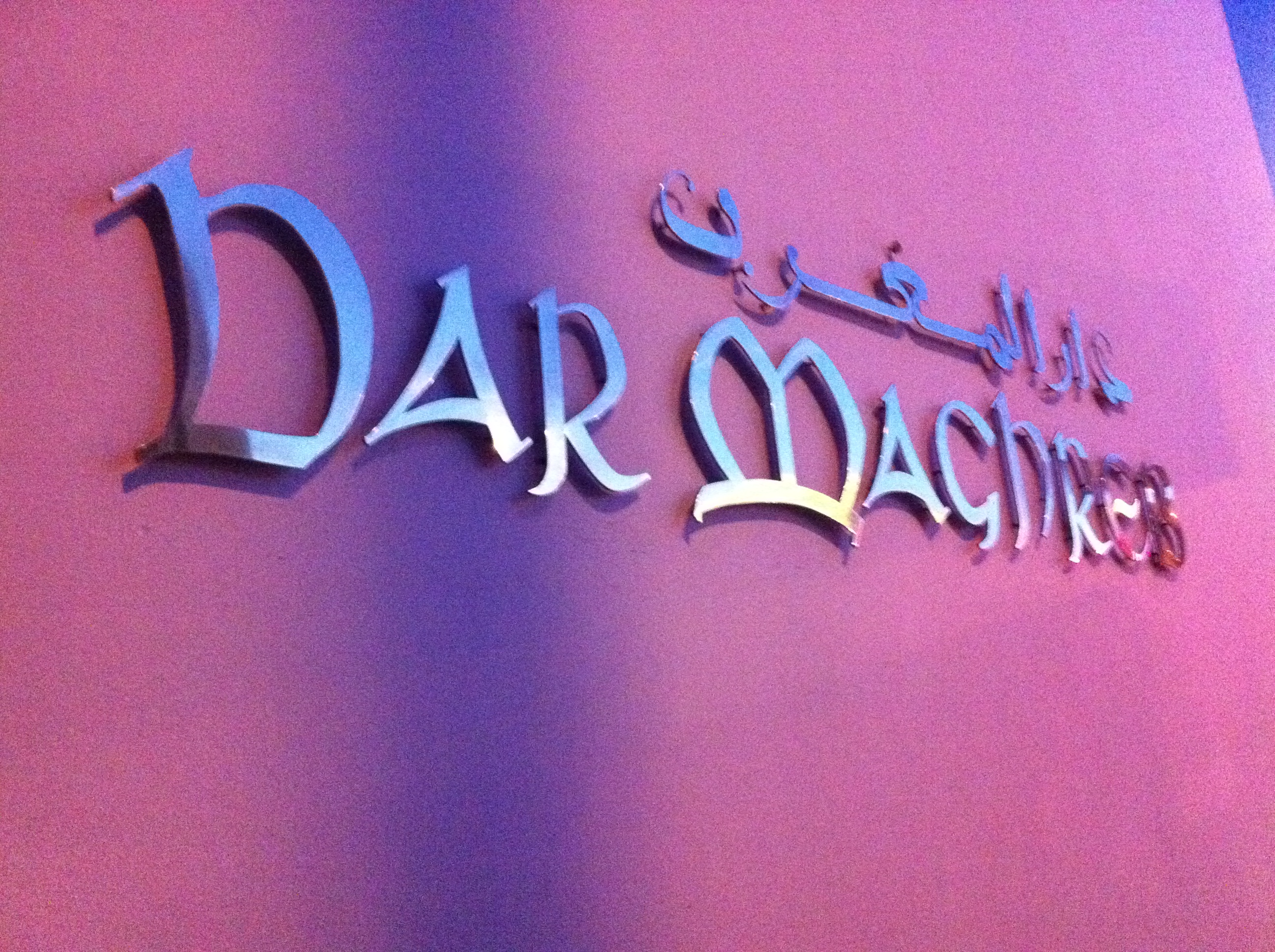
And Dar Maghreb was among the proudest buildings in the city. From the outside, a gorgeous stucco square with desert palms and nothing to let you know what it was but a bold swatch of silver Arabic on the wall. Pass through the gilded silver doors, and you were a world away from the seedy buzz of Sunset Boulevard just outside. A fountain bubbled peacefully in the middle of an interior courtyard. In high-ceilinged rooms to the right and left came jovial conversation, the scent of roasted meats and cinnamon, and the sound of finger cymbals being clanged by busty belly dancers. And Monsieur Dupar, always Monsieur Dupar, with a hearty welcome and shake of his fat hand.

Fast forward a couple decades, and we decide to take my son, Flynn, to Dar Maghreb for his 7th birthday. We invited my father. Monsieur Dupar is now at the Great Table in the Sky, ordering celestial servants around. He had a massive coronary on an airplane between Bordeaux and Amsterdam. Minus his robed presence inside those sparkling silver doors, Dar Maghreb feels sad and forlorn. The seven-course meal and belly dancing has become a cliché, the Arabic writing on the building now sits astride the English translation, “Dar Maghreb,” as if the restaurant either felt neglected and needed to remind people it was here, or maybe they wanted to prevent vandalism from people who mistook the building for a mosque. How the times have changed. The waiters are now Chinese. And what used to be a bustling, thrilling restaurant was now almost empty on a Thursday night even as Hollywood pulsed frenetically outside. I almost expected to hear the requisite crickets on cue.

The sugary savory bastilla, the fragrant carrot and eggplant salad scooped up with sesame bread, the roast chicken with lemon and olive to the final sip of mint tea all still taste just as good, if tinged with a melancholy aftertaste at the gaping absence of Pierre Dupar. And the kids loved the entire experience. But my dad looked a little sad, and I couldn’t help but have the feeling you get when you see a performer 30 years beyond their prime, still belting out their one hit song to no one in particular in a lounge at an airport Holiday Inn.

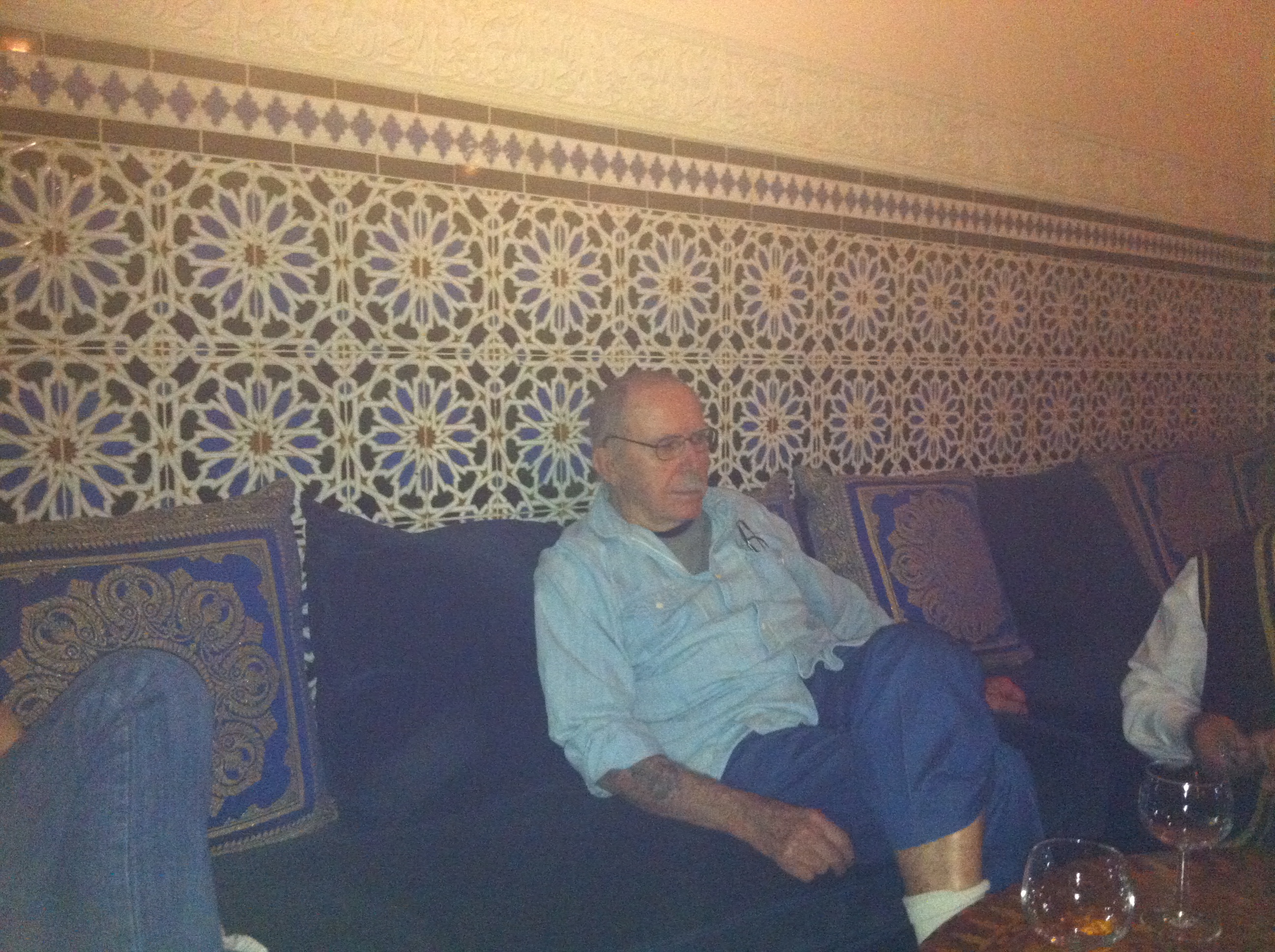
Dr. Colgin at Dar Maghreb

The last time I was at Dar Maghreb was five or six years before, for Pierre Dupar’s memorial. It was sad to say goodbye to Pierre and to know we would never again see him welcoming us into that courtyard. Maybe we’ll go back to Dar Maghreb again, or maybe we won’t. This felt a bit like a goodbye, too.

Previous Older Entries Next Newer Entries