
Fish at the ABC Market in Little Saigon
When friends invited us to spend a few days at a beach house in Seal Beach, my imagination immediately went east. Across the 405, into the lovely city of Westminster… to the markets of Little Saigon.
If you’ve not been to Little Saigon, you’re missing a fascinating window into the culture of Vietnam. If you haven’t eaten much Vietnamese food, you don’t know what you’ve been missing. I’ll include a couple recipes later in this post. But be warned — you’ll have trouble finding shredded green papaya, fermented fish sauce and sugar cane at the Vons. So you may need to make an afternoon adventure of it. And if you don’t live in Los Angeles, well… you can dream. (Or improvise.)

The dreaded durian
Little Saigon is in Orange County, east of Huntington Beach. If you’re on the 405, get off at Golden West, find Bolsa Ave., and head east. Soon you’ll begin seeing pagoda roofs, Pho restaurants and businesses owned by people named Nguyen. Speaking of those Pho (beef noodle soup) restaurants — or any other kind of Vietnamese restaurant — if it’s lunchtime and you’re hungry, pick one and stop in. I have no specific recommendations — I’ve randomly patronized several of them and they’re all good. But it is the markets, first and foremost, that I go for.
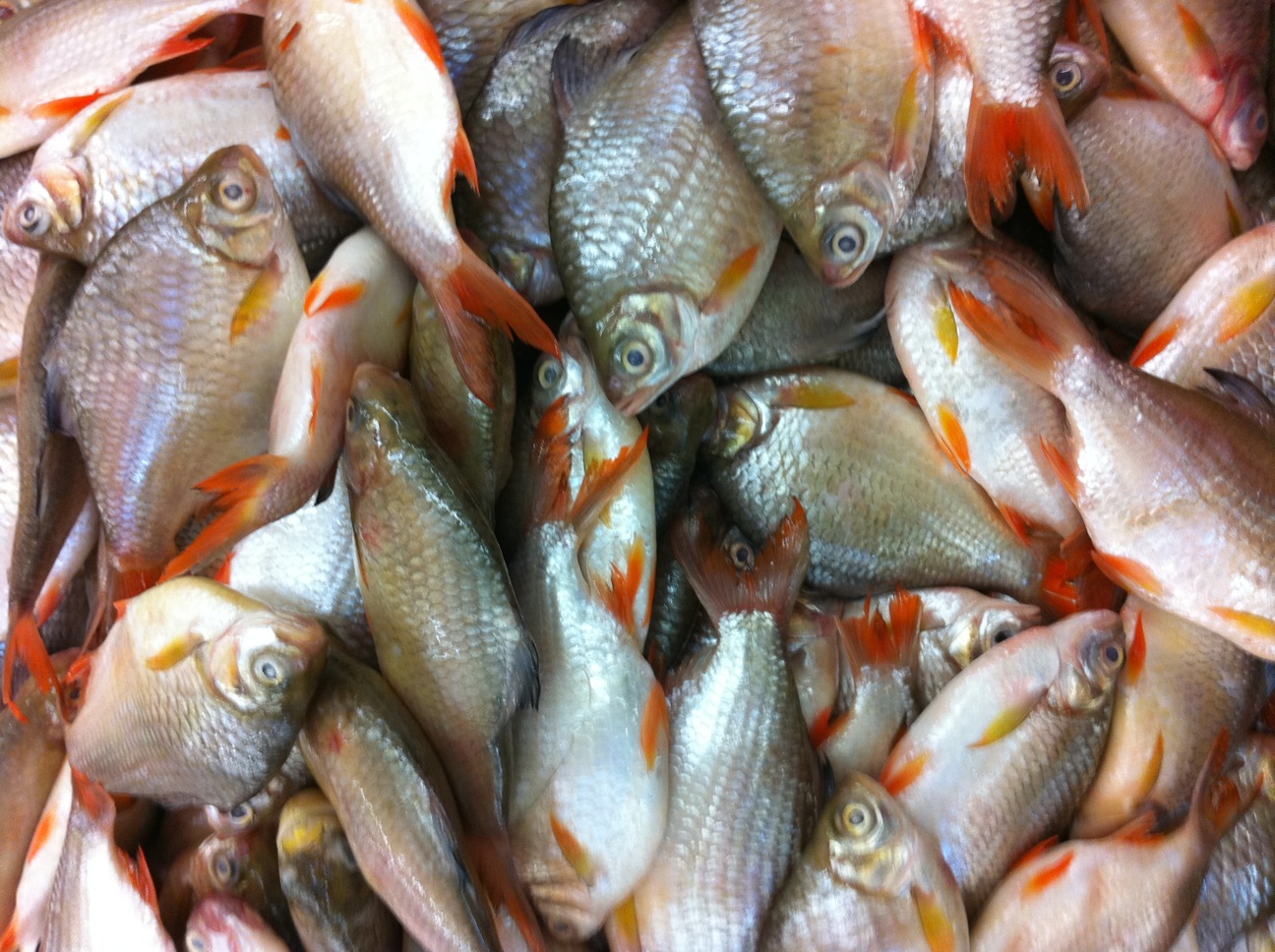
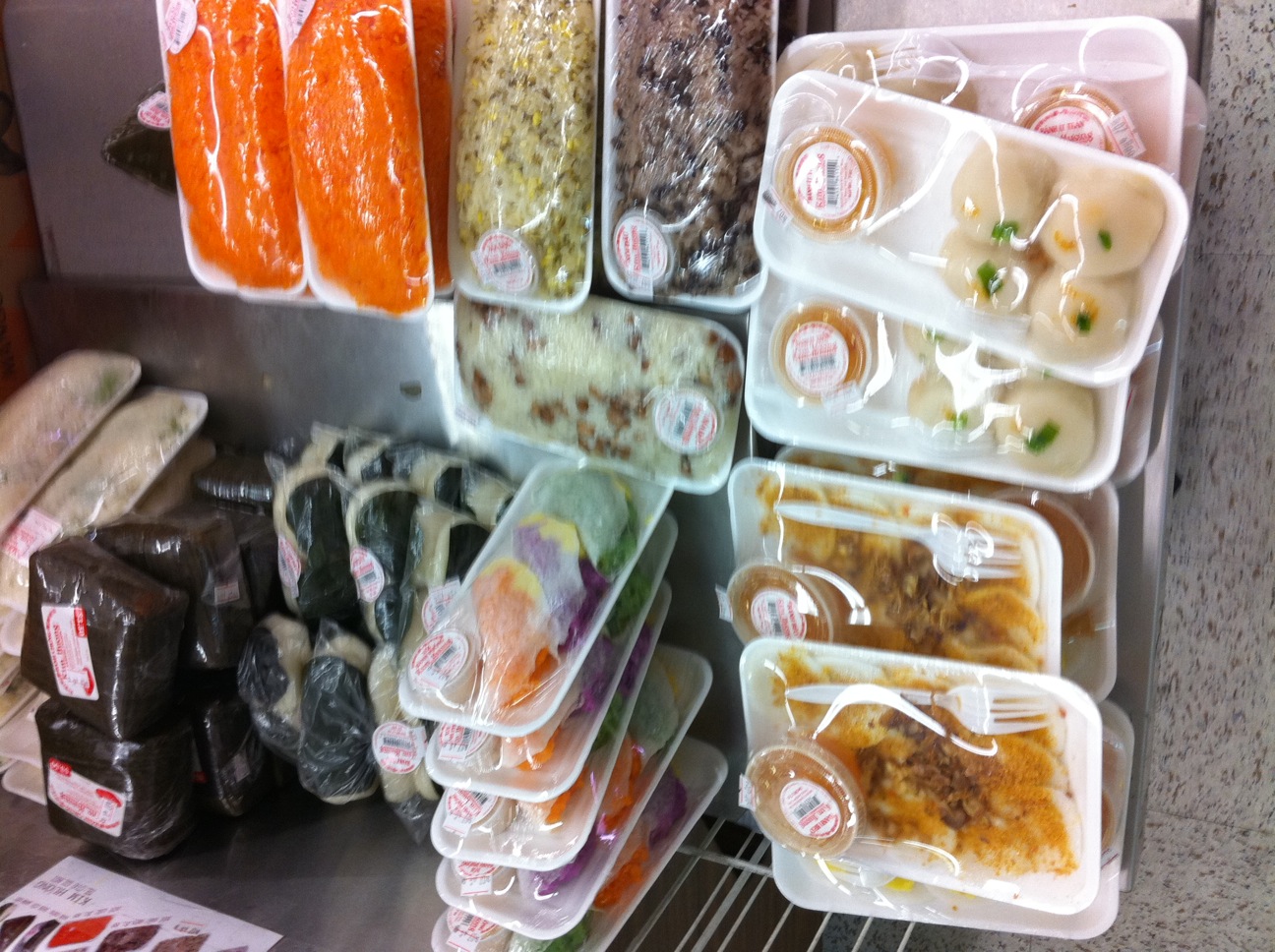
As you head east on Bolsa, the first market you’ll come to on the right is the ABC Market. A little further along, just past Magnolia in an alley to the left, is the A Dong Market, another good one. These places are bigger than Ralphs and filled with things you’ve likely never seen — stinky durian fruits, preserved duck eggs, live eels, dried creatures of every kind, black-skinned chickens. Vietnamese people crowd the fish bins and yell out orders to the white-frocked guys at the offal counter. It’s as close as a vacation to Southeast Asia as you’ll come. Stroll up and down the aisles and you’ll be in awe of the variety. I come here to get things I will use for making French or Italian dishes — ducks, frozen soft shell crabs, beef short ribs, whole raw anchovies. The prices are great. And I come for things I could only imagine using for Vietnamese food — that green papaya and fermented fish sauce I mentioned, for example. I also get Chinese goods like dilluted red vinegar, chili oil and XO sauce. And, in a nod to Vietnam’s French Indochine days, you’ll even find pretty darn good baguettes and croissants.

Delicious packaged things
Vietnamese cuisine is one of the most lovely of all Southeast Asia. Lighter and less sugary than the more familiar Thai cooking, less salty and fermented than Korean, its most resonant characteristic is the bounty of flavorful “condiments” served with each dish — fragrant mint and basil leaves, crunchy batons of cucumber, pickled garlic and chopped peanuts. And their cloudlike rice wrappers — which you’ve likely begun to see being wrapped around miscellaneous things at Gelson’s or Whole Foods. (Containing no fat or gluten, they’re highly yoga-student friendly.) Following are two of the best (in my humble opinion) pillars of many a Vietnamese menu. Again, these require a few unusual ingredients and a bit of focus. But the results are well worth your effort. And you didn’t have any plans this Saturday anyway, did you…
Green Papaya Salad
Serves 4
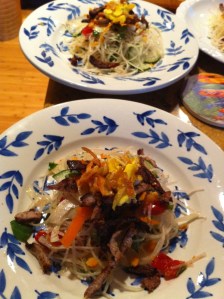
Green papaya salad
1/2 lb shredded green papaya (available in the produce section at the above two markets)
1/2 lb New York steak, cut into slices
1 clove garlic, finely grated
olive oil
1 tomato, cut in eighths
1 small cucumber, cut in 1/4 inch slices then in half
1/2 small onion, cut in half and thinly sliced lengthwise into slivers
2 tbsp basil leaves
2 tbsp mint leaves
1/4 cup thinly sliced or grated carrot
1/4 cup chopped peanuts
Nuac Cham Dressing:
Juice 3 limes
3 tbsp fish sauce (nuac mam in Vietnamese)
1/4 cup water
3 tbsp sugar
1 clove garlic, finely grated
1/4 tsp crushed red pepper
Make the dressing. Combine the lime juice, water and fish sauce, and stir in sugar, whisking vigorously until it has dissolved. Add garlic and red pepper, stir and set aside.
For the salad, slice your steak into thin slices. Mix with a drizzle of olive oil, the grated garlic, a dash of sea salt and freshly ground pepper. Let marinate for 10 minutes, then cook on a very hot grill for about 3 minutes on a side, until browned. Remove and slice into thin strips.
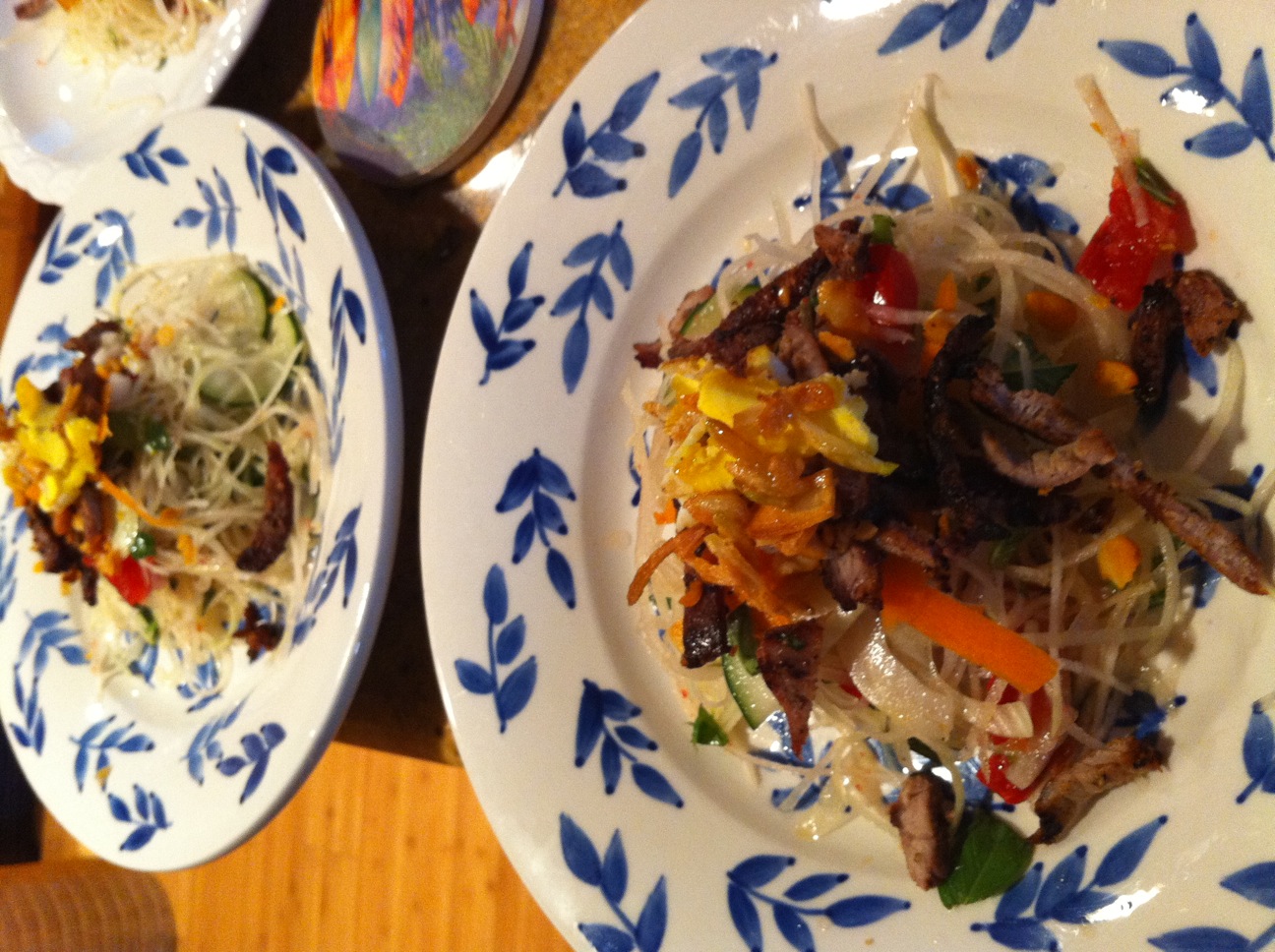
Toss the papaya with sliced cucumber and tomato and herbs. Pour in about 2/3 of your dressing (save a third for dipping sauce for your shrimp dish, below, if you are making it). Add a good drizzle of olive oil and toss. Divide between four plates. Top each salad with strips of beef, some shreds of carrot for color, and a sprinkling of chopped peanuts. (I’ve also chopped up a well-fried egg in the pics above.)
(Note: you could make this salad with finely chopped napa cabbage if you couldn’t get the green papaya.)
Shrimp on Sugar Cane
Serves 4
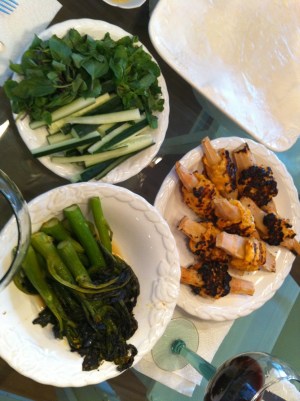
(l to r) rice papers, condiments, shrimp on sugar cane, braised chinese broccoli
1/2 lb peeled and deveined shrimp
1 garlic clove
1 egg
salt and pepper
4 sugar cane, 4-6 inches long, cut in half lengthwise (find canned at Asian markets)
8 dried rice papers
8 small romaine lettuce leaves
1 bunch mint leaves
1 bunch basil leaves
1 small cucumber, cut into batons
1 cup cooked bean thread noodles
1/4 cup chopped peanuts
2 tbsp nuoc cham (recipe above) for dipping
Making sure there is no shell left on your shrimp, puree in a food processor with the egg, garlic and sprinklings of salt and pepper. (A blender will also work, although you’ll need to turn off and stir a few times to make sure your shrimp is thoroughly pureed.) Wet your hands, and form a small patty of shrimp around each half of sugar cane. (Sort of like a shrimp popsicle.) Place on a large plate or platter. Heat BBQ grill to high, and cook the shrimp popsicles about 4 minutes on each side, or until they begin to brown. (Make sure all the shrimp is cooked before you remove.)
Cook the bean thread noodles. Heat some water in a small pot to high. Toss in a small bundle of bean thread noodles (they come in individual dried bundles). Turn off heat and let noodles sit for a few minutes, stirring once or twice, until they are soft. Drain.
Set your condiments out on a large plate or two, as in the picture above — the romaine leaves, the herbs, the cucumber batons, the bean thread noodles and the peanuts. Place the nuoc cham in a small dipping bowl. Rehydrate the rice papers by running them briefly under warm water. Lay out on a large platter, making sure they don’t overlap much or they will stick together. (Alternately, you can rehydrate them one or two at a time, as needed.) Lay out shrimp popsicles on another plate.
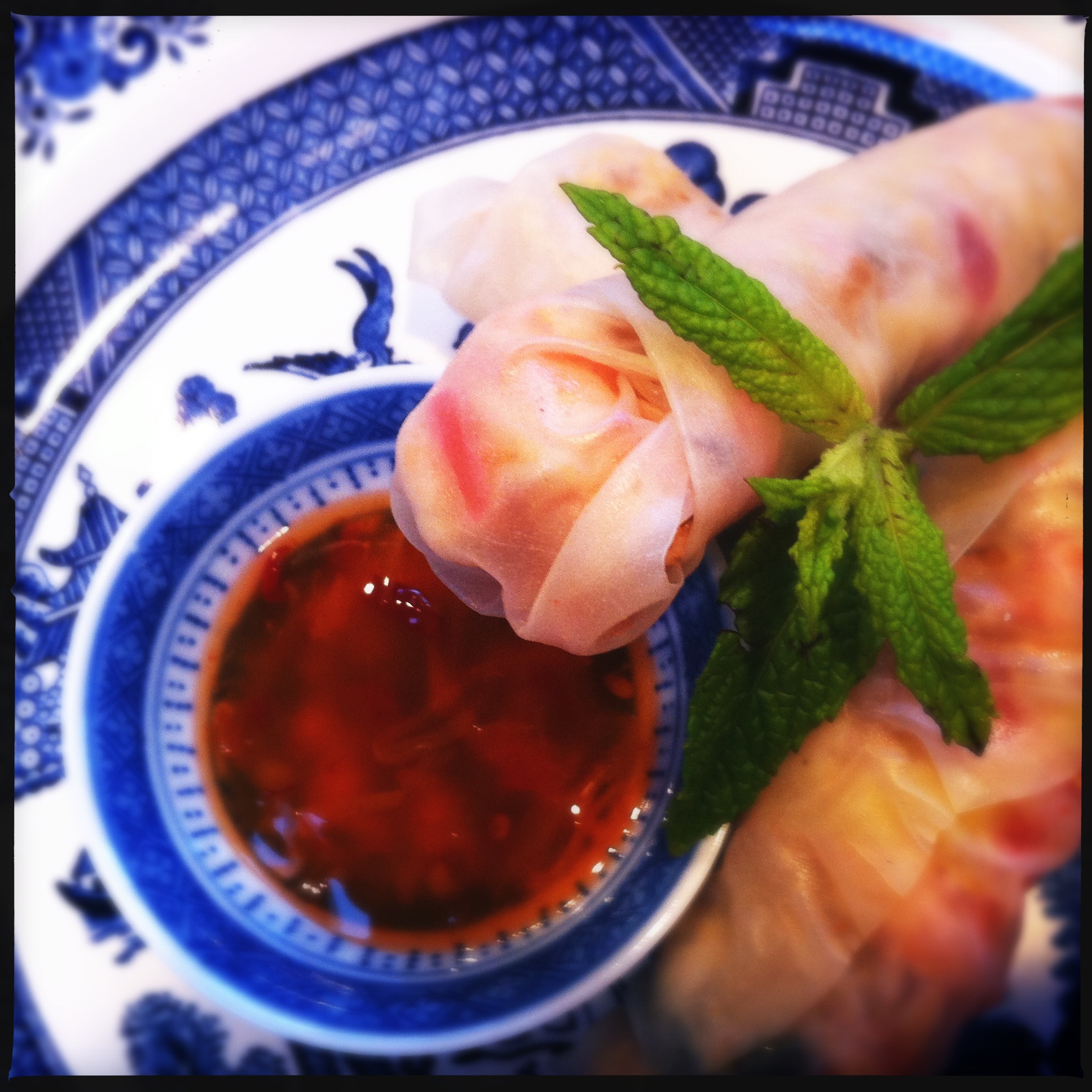
Each diner assembles his or her own rolls. Take a rice paper, place a lettuce leaf near the center, take shrimp meat off of one sugar cane and place on lettuce leaf. Top with condiments as desired — a few noodles, some mint and basil leaves, a couple cucumber batons, some peanuts… and then roll up like a burrito. Dip into nuoc cham and enjoy with a cold beer! (Singha is my choice with this meal.)





 skinny girls & mayonnaise